Monday, cloudy over east and warm 50. I washed and dried some clothes outside. Ironed and mended for Gerald. He left at 5:30. Had letter from Marilyn.
Friday, November 16, 2012
Monday November 16, 1964 The Frances Hubbard Diaries
November 16, 1964
Monday, cloudy over east and warm 50. I washed and dried some clothes outside. Ironed and mended for Gerald. He left at 5:30. Had letter from Marilyn.
Comment: And Mom comes through again..must be going back to SUNY for last semester.....and the number 1 song on this day in 1964 was...."Baby Love" by the Supremes.....
Monday, cloudy over east and warm 50. I washed and dried some clothes outside. Ironed and mended for Gerald. He left at 5:30. Had letter from Marilyn.


Thursday, November 15, 2012
Sunday, November 15, 1964 The Frances Hubbard Diaires
November 15, 1964
Sunday, beautiful, warm day, 60's, mostly sunny. Clifton, girls and I went to church and Sunday school. Girls sang. Sue and I went at night. Gerald got back with Mary Ann 5:30. LaVerne and Roberta here toward night. Wayne and Laura too.
Comment: And the family and friends gather, wonder what song the girls sang...this is a great one...
Sunday, beautiful, warm day, 60's, mostly sunny. Clifton, girls and I went to church and Sunday school. Girls sang. Sue and I went at night. Gerald got back with Mary Ann 5:30. LaVerne and Roberta here toward night. Wayne and Laura too.
Wednesday, November 14, 2012
Saturday, November 14, 1964 The Frances Hubbard Diaires
November 14, 1964
Saturday, cloudy and windy, 40's. Had our septic tank cleaned. Robert Mae (?) from E. Cobleskill did it. Men worked on it most of the day. Gerald, David and Mary Ann went to Rochester. Clifton and girls and I went to Middleburgh 4 pm to return snake to hardware store. Heard that Ellis Kinks (?) wife had been in a bad accident few days previous and both legs nearly cut off.

Tuesday, November 13, 2012
Friday, November 13, 1964 The Frances Hubbard Diary
November 13, 1964
Friday, beautiful, warm day, 65, very windy. Clifton and I went to Oneonta with David's car in am and got a new machine head. Ate lunch with Roberta and LaVerne. I washed in pm. Discovered water wasn't draining out properly. Clifton and boys worked at that. Wayne and girls went to Middleburgh after supper after 50 cent sprocket stuff? for tank. Boys went out at night.
 Comment: Constant maintenance around the house.....fall in the Catskills.....
Friday, beautiful, warm day, 65, very windy. Clifton and I went to Oneonta with David's car in am and got a new machine head. Ate lunch with Roberta and LaVerne. I washed in pm. Discovered water wasn't draining out properly. Clifton and boys worked at that. Wayne and girls went to Middleburgh after supper after 50 cent sprocket stuff? for tank. Boys went out at night.

Monday, November 12, 2012
Thursday, November 12, 1964 The Frances Hubbard Diaires
November 12, 1964
Thursday, warm and sunny, 60's. Clifton and David finished putting asphalt siding on back of house. Wrote to Marilyn in am and called Sears about my machine; they told me to bring the head back and they would give me another. Gerald came home about 4 pm.
 Comment: Not sure why I came home, should be knee deep in my last semester at Suny@Albany.....here is the room where mom did all her sewing...kinda unkempt because she had moved out at the time......I remember her sewing with an old treadle Singer most of the time.....now it's a Sears......
Thursday, warm and sunny, 60's. Clifton and David finished putting asphalt siding on back of house. Wrote to Marilyn in am and called Sears about my machine; they told me to bring the head back and they would give me another. Gerald came home about 4 pm.

Sunday, November 11, 2012
Wednesday, November 11, 1964 The Frances Hubbard Diaires
November 11, 1964
Wednesday, overcast and some sun, 55 high. Kids home for Columbus Day. Clifton and I went to Middleburgh in am with Opel after asphalt siding for dinning room and back side. The boys put part of it on in pm. Red Schemerhorn was here to help. I did some ironing.
 Comment: Did not know the Opel was still running. Still getting ready for winter.....here is a bleak view to the barn from the house in early winter.....
Wednesday, overcast and some sun, 55 high. Kids home for Columbus Day. Clifton and I went to Middleburgh in am with Opel after asphalt siding for dinning room and back side. The boys put part of it on in pm. Red Schemerhorn was here to help. I did some ironing.

Saturday, November 10, 2012
Tuesday, November 10, 1964 The Frances Hubbard Diaires
November 10, 1964
Tuesday, partly cloudy, 50's, overcast nice day. Clifton, David and I went to Saugerties to look at back hoe and on to Cobleskill and did shopping. Lyle called and asked me to be chairman of Christmas program. I cut out aprons and blouses for Marna and Patty at night. Very little rain in night.
 Comment: The quest for reliable water continues...here are Marna, Dean and Patty in 1963 about a year prior.....
Tuesday, partly cloudy, 50's, overcast nice day. Clifton, David and I went to Saugerties to look at back hoe and on to Cobleskill and did shopping. Lyle called and asked me to be chairman of Christmas program. I cut out aprons and blouses for Marna and Patty at night. Very little rain in night.

Friday, November 09, 2012
Monday, November 9, 1964 The Frances Hubbard Diaries
November 9, 1964
Monday, overcast with some sun, windy. I washed in am. Had a letter from Marilyn. LaVerne and Roberta here a few minutes in the evening. LaVerne bought Morris Minor car off Jackson's.
 Comment: I don't remember this car, but it was a small car built in England from about 1948 to 1971.
Monday, overcast with some sun, windy. I washed in am. Had a letter from Marilyn. LaVerne and Roberta here a few minutes in the evening. LaVerne bought Morris Minor car off Jackson's.

Thursday, November 08, 2012
Sunday, November 8, 1964 The Frances Hubbard Diaries
November 8, 1964
Sunday, cloudy, 50, went to church and Sunday school. LaVerne and Roberta here for dinner. Patty Young came home from church with Susan. We went to West Conesville in pm to look at Jackson's car. LaVerne and Roberta and Carol went with David to take Doug to Kingston at night. Sue and I went to church. Jr. Clapper was at church in am.
 Comment: Sounds like they are looking for another car..Doug back to duty.....Doug in younger days with siblings David, Carol, Wayne, Susan..looks like a cold spring day with snow still on the mountains...David is holding a rabbit.....
Sunday, cloudy, 50, went to church and Sunday school. LaVerne and Roberta here for dinner. Patty Young came home from church with Susan. We went to West Conesville in pm to look at Jackson's car. LaVerne and Roberta and Carol went with David to take Doug to Kingston at night. Sue and I went to church. Jr. Clapper was at church in am.

Wednesday, November 07, 2012
Saturday, November 7, 1964 The Frances Hubbard Diaries
November 7, 1964
Saturday sunny day warmer. Clifton dug for spring in field below spring lot. I baked in pm. Girls did homework.
Comment: Still looking for consistent water supply....here are my memories of The Spring Lot......
Saturday sunny day warmer. Clifton dug for spring in field below spring lot. I baked in pm. Girls did homework.
Comment: Still looking for consistent water supply....here are my memories of The Spring Lot......

The “Spring Lot” was three acres out southeast across the road
Beyond the “crik” with minnows, frogs, the barnyard with its toads
Some years we’d plant Sudan Grass, tall, billows, green, in waves
In other years, we planted corn. Between the rows, dark caves
Lairs, from which we’d “hide n’ seek” and hunt for dangerous game
The rustling winds and dank dark earth held fears we couldn’t name
The lot was close and in full view of folks from our front porch
And through the trembling grass or corn, light flickered, as a torch
One day I lay beside the spring in warm and tender sun
And overturned a rock to watch the insects’ frantic run
I pondered their perceptions in a world I couldn’t see
And wondered if their eyes and minds could see that it was “ME”
The “ME” who made the calls about their right to live or die
I thought that this was how we were when looked at through God’s eyes
And then I saw wild strawberries, a sweet and acrid taste
And left that rock turned over, and the insects to their fate
I often think, if there be gods, they must be like a child
Playing in a “Spring Lot” while we skitter, scared and wild
They’ll never know the why, the what, the wonder of our days
‘cause all they see are strawberries and blithely move away
Tuesday, November 06, 2012
Friday, November 6, 1964 The Frances Hubbard Diaries
November 6, 1964
Friday, cloudy, cool, 30's I washed in am and hung clothes outside but they didn't dry good. David went to Ashokan job hunting, no luck. I went over to Madylin's (Blakesley) in am after gift for shower. Girls and I went to Betty's shower at Conesville with Madylin at night. LaVerne and Roberta called in evening. Doug came home 7:30.
 Comment: Not sure which Betty the shower is for....or if it's a wedding or baby shower...
Friday, cloudy, cool, 30's I washed in am and hung clothes outside but they didn't dry good. David went to Ashokan job hunting, no luck. I went over to Madylin's (Blakesley) in am after gift for shower. Girls and I went to Betty's shower at Conesville with Madylin at night. LaVerne and Roberta called in evening. Doug came home 7:30.

Monday, November 05, 2012
Thursday, November 5, 1964 The Frances Hubbard Diaries
November 5, 1964
Thursday, cloudy and some rain, 40's. Clifton called different one to see about a bulldozer to dig ditch for water line. Louise called in am, she had a bad cold and I had a prayer meeting for her. Went to Ella's in pm. Wrote to Marilyn.
 Comment: Still plagued with water problems, maybe this is the answer.....
Thursday, cloudy and some rain, 40's. Clifton called different one to see about a bulldozer to dig ditch for water line. Louise called in am, she had a bad cold and I had a prayer meeting for her. Went to Ella's in pm. Wrote to Marilyn.

Sunday, November 04, 2012
Wednesday, November 4, 1964 The Frances Hubbard Diaries
November 4, 1964
Wednesday, lovely, warm day, 60's. Clifton and I went to see Earl about his bulldozer and we drove down to see Dewitt's about one. I had headache. David was laid off at Carlisle.
Comment: Dad is going to be working on the water problem they've had over the past month of so.....he was an Operating Engineer and could operate almost any kind of equipment.....here are some of the things he did............
Wednesday, lovely, warm day, 60's. Clifton and I went to see Earl about his bulldozer and we drove down to see Dewitt's about one. I had headache. David was laid off at Carlisle.
Dad A Confession, Original By Gerry Hubbard
Solidarity Forever
An Operating Engineer was what my dad was called
He ran the big equipment, and I guess he drove them all
Dozers, graders, drag-line cranes, he worked ten hours a day
From spring through fall, six days a week, he drew good union pay
He’d usually come home close to dark, all sunburned, cloaked with dust
Us kids would all race down the hill, to greet him, to be first
He’d stop the car and pick us up, on fenders up we’d ride
We hung from running boards and doors, rising like the tide
Euclid scrapers, high-speed pumps, he “sloped” with Cat D8s
Through parts of west New England and all through New York State
He worked the New York Thruway and Route One-Forty-Five,
Milking cows at four am to keep the farm alive
In summer’s dust and searing sun his lips and hands would crack,
And he’d rub in Bag Balm Ointment that he carried in a sack
In winter’s numbing wind and cold, he stood ten hours a day
To watch an air compressor pump water from a quay
We’d go to work with him sometimes when work sites were nearby
And ride the big equipment, it was dusty, hot and dry
LaVerne and I and sometimes Doug would go and spend the day
With diesel fumes & roaring “Eucs” as dozers pushed away
And though he had his issues, he was held in high regard
And I never heard him once complain ‘bout working so damned hard.
When someone said I looked like him at a Hill reunion chat
Tom O’Hara softly said, “Well, there’s nothing wrong with that”.
And though I’m not religious, as all friends will attest
Here’s a spiritual iota to which I must confess
Sometimes when summer’s thunder clouds are roiling up on high
I think of Dad on his big D8, “sloping” in the sky…
Sometimes when summer’s thunder clouds are roiling up on high I think of Dad on his big D8, “sloping” in the sky
Saturday, November 03, 2012
Tuesday, November 3, 1964 The Frances Hubbard Diaires
November 3, 1964
Tuesday, Election day. Beautiful, warm, sunny day, 70. I cleaned the house all through in the am. Lorraine and Howard came about 11 am. We went to vote and ate dinner at Mrs. Dugan's; they went with us.
 Comment: Hey, Hey, LBJ, How many kids did you kill today? And about 40 years later it happened again....from the BBC:
1964: Election triumph for Lyndon B Johnson
Lyndon Baines Johnson has been elected president of the United States defeating hard-line Republican Senator Barry Goldwater of Arizona by an overwhelming majority.
The Democrats adopted a social reform platform, with President Johnson, also known as LBJ, campaigning as a candidate of peace, pledging not to widen US military involvement in Vietnam.
But soon after his election he increased the number of US troops in the region after sustained attacks by the communist Viet Cong. Troops numbers continued to mount reaching a peak of 550,000 in 1968.
In spite of this increase, there seemed no end to the war and LBJ's public support declined.
What is more, the cost of the war sucked money away from social programmes and began to fuel inflation.
Living standards for black Americans failed to improve and there were several race riots in the mid to late 1960s all over America.
On 31 March, 1968, LBJ shocked TV viewers with a national address in which he announced major reductions in the bombing of North Vietnam and a plan to request peace talks. He also said he would not be running for nomination for the 1968 presidency.
In 1969 LBJ retired to his ranch in near Johnson City, Texas. He died in January 1973 of a heart attack
Tuesday, Election day. Beautiful, warm, sunny day, 70. I cleaned the house all through in the am. Lorraine and Howard came about 11 am. We went to vote and ate dinner at Mrs. Dugan's; they went with us.
1964: Election triumph for Lyndon B Johnson
Lyndon Baines Johnson has been elected president of the United States defeating hard-line Republican Senator Barry Goldwater of Arizona by an overwhelming majority.
The man who took over the presidency last year after the assassination of President Kennedy got the largest popular majority in US history - greater than Franklin D Roosevelt's landslide victory in 1936.
The campaign took place in the middle of an escalating Vietnam war.
Senator Goldwater's demands that North Vietnam should be continuously bombed and his questioning of the US social security system proved unpopular.The Democrats adopted a social reform platform, with President Johnson, also known as LBJ, campaigning as a candidate of peace, pledging not to widen US military involvement in Vietnam.
But soon after his election he increased the number of US troops in the region after sustained attacks by the communist Viet Cong. Troops numbers continued to mount reaching a peak of 550,000 in 1968.
In spite of this increase, there seemed no end to the war and LBJ's public support declined.
What is more, the cost of the war sucked money away from social programmes and began to fuel inflation.
Living standards for black Americans failed to improve and there were several race riots in the mid to late 1960s all over America.
On 31 March, 1968, LBJ shocked TV viewers with a national address in which he announced major reductions in the bombing of North Vietnam and a plan to request peace talks. He also said he would not be running for nomination for the 1968 presidency.
In 1969 LBJ retired to his ranch in near Johnson City, Texas. He died in January 1973 of a heart attack
Friday, November 02, 2012
Monday, November 2, 1964 The Frances Hubbard Diaries
November 2, 1964
Monday, nice day, 60's. I washed in am and mother called and asked us to come over for dinner. Clifton signed up (for unemployment) and I shopped. Susan went to Schenectady to "little red school house" that Gilboa Central was on. Had a letter from Marilyn. We got more insulation at Bush's. Gerald called at night.
 Comment: Still working on getting ready for winter and it seems no matter what we did, when the temperature went below zero, it was cold throughout the house......Here is a view to the house in the winter...that's our dog Prince who fell out of the tower and broke his left hip, you can see that his left leg is stiff.....more about the tower:
.....The following is excerpted from “Fire Towers Of The Catskills, Their History And Lore”, Martin Podskoeh, Purple Mountain Press, 2000.
In 1947, the state took down the 80-foot tower that stood on Gilbert Lake State Park and rebuilt it on Hubbard Hill. The mountain is named after the Hubbard family who have owned land and farmed there since the 1800’s.
However, the state misnamed it Leonard Hill Fire Tower, after a lower hill owned by Dr. Duncan Leonard next to Hubbard Hill.
“It wasn't supposed to be Leonard Hill,” says Frances Hubbard. “Somebody got the maps mixed up. It always bothered me.”
Fred VanAken was the first observer at the tower. He started working April 8, 1949. He and the other rangers parked at the Hubbard farm and followed a rugged trail along the telephone lines to the tower.
“About 15 years after the tower was built, the state purchased 75 acres from my parents,” said Doug Hubbard, son of Clifton and Frances Hubbard. “The state built another road to the tower on the north side of the mountain, and we hardly saw the observers after that.”
One day during the 80’s, observer Judy Merwin gazed out the tower window at the beautiful valleys and woods of Schoharie. A young couple standing next to her had hiked to the tower and were learning about the area. Judy pointed out the Majestic Catskill Mountains to the south and the fertile Schoharie Valley to the north.
In the distant they could see a single-engine plane approaching the tower. As the plane got closer, they saw that it was pulling something. The young man said to his girlfriend, “Look! It has a sign.”
The words were now visible: “WILL YOU MARRY ME?” The young woman’s eyes filled with tears. She embraced the young man with a heartfelt, “Yes.
Monday, nice day, 60's. I washed in am and mother called and asked us to come over for dinner. Clifton signed up (for unemployment) and I shopped. Susan went to Schenectady to "little red school house" that Gilboa Central was on. Had a letter from Marilyn. We got more insulation at Bush's. Gerald called at night.

.....The following is excerpted from “Fire Towers Of The Catskills, Their History And Lore”, Martin Podskoeh, Purple Mountain Press, 2000.
In 1947, the state took down the 80-foot tower that stood on Gilbert Lake State Park and rebuilt it on Hubbard Hill. The mountain is named after the Hubbard family who have owned land and farmed there since the 1800’s.
However, the state misnamed it Leonard Hill Fire Tower, after a lower hill owned by Dr. Duncan Leonard next to Hubbard Hill.
“It wasn't supposed to be Leonard Hill,” says Frances Hubbard. “Somebody got the maps mixed up. It always bothered me.”
Fred VanAken was the first observer at the tower. He started working April 8, 1949. He and the other rangers parked at the Hubbard farm and followed a rugged trail along the telephone lines to the tower.
“About 15 years after the tower was built, the state purchased 75 acres from my parents,” said Doug Hubbard, son of Clifton and Frances Hubbard. “The state built another road to the tower on the north side of the mountain, and we hardly saw the observers after that.”
One day during the 80’s, observer Judy Merwin gazed out the tower window at the beautiful valleys and woods of Schoharie. A young couple standing next to her had hiked to the tower and were learning about the area. Judy pointed out the Majestic Catskill Mountains to the south and the fertile Schoharie Valley to the north.
In the distant they could see a single-engine plane approaching the tower. As the plane got closer, they saw that it was pulling something. The young man said to his girlfriend, “Look! It has a sign.”
The words were now visible: “WILL YOU MARRY ME?” The young woman’s eyes filled with tears. She embraced the young man with a heartfelt, “Yes.
Thursday, November 01, 2012
Sunday, November 1, 1964 The Frances Hubbard Diaries
November 1, 1964
Sunday, nice day, 60's, Girls and I went to church and Sunday school and we were at LaVerne's and Roberta's for dinner. Colleen and Sharon were there. Sue and I went to church at night. Grace Merwin, Irene Browns aunt, was buried.

Comment: Coleen and Sharon Renz, Roberta's sisters, were there.....kinda typical Sunday....
Here is a bunch of family attending church with Mom when Marilyn was visiting back in the mid nineties..missing are my siblings, David, Wayne, and Carol
Here is a bunch of family attending church with Mom when Marilyn was visiting back in the mid nineties..missing are my siblings, David, Wayne, and Carol
Wednesday, October 31, 2012
Friday, October 31, 1964
Saturday, sunny, 50's. John Law came in am and had coffee with us. Clifton and boys put ceiling up in wood house. Sue and I finished picking up nuts.
 Comment: John Law was a candidate for office and came by "electioneering" and although I do not recall this particular visit, I do remember other candidates coming around and also Dad "electioneering" for Gilboa Highway Superintendent. Electioneering usually meant visits to homes throughout the area and the candidates always brought all kinds of candy for the kids in the house. I remember the boxes of candy my Dad bought for the purpose and that was just about the only times I remember having lots of candy around the house. I went to school with Johnny Law's children: Patty who was one year ahead and Billy who was one year behind me in school. I just had contact with Billy through Facebook.....
Sue and Mom were probably picking up "butternuts" from the large tree just at the bottom of the hill. Underneath the greasy fibrous husk was a very rough and tough shell that to crack with out destroying the "meat" inside, had to be hit with a hammer on one end....
Tuesday, October 30, 2012
Friday, October 30, 1964, The Frances Hubbard Diaries
October 30, 1964
Friday, fair and warm, 60's. I washed in morning early then helped Clifton put insulation in wood house. Girls didn't go to Halloween party at the parsonage.
Comment: Wonder why girls did not go to party?? Here is what Socrates Hubbard wrote about harvesting in October about a hundred years prior. He lived around Scott's patent with a view to Livingstonville:
"In October as soon as the corne was ripe it was cut and put into stoots this was a job I rather liked, and then soon after the first of November it was drawn to the barn and set up on the Barn floore put into the stables etc. Then came the fun of husking. By this time the weather began to get cold so that in the morning especialy we were glad to sit in sun the large east doors of the barn were opened and rite in front of them we began our work throwing the golden ears into a basket until full then empty into the wagon. I generaly colected quite a veriaty of spoted red black, blew & diffirant collared corn ears. Flax was an other article we generaly raised. an half achor was about the extent. This however took a good deel of labor. Flax has to be pulled this is don by swinging the left hand around the flax as much of it as can be easily pulled at once the rich [right] is then used taking hold below the left. The handfull is spred on the ground and so in the seeds always the same way. It is shortly gethered up into bundels and set five or six in a place until the seed will thrash easily. The thrashing is don on the barn floor with frales. This thrashing was generaly don some rany day when we could not work out. I can now see the cold damp day Father Paul and myself working with the flax my part of the work was playing with the beautifull seed as it sliped from the faning mill. The stems or stalks were taken to the meddow and spred in rows left for a month or more to rot, then bound into larg bundels and placed in the barn for winter treatment. I never liked to dig potatos to tutch them sends a shudder through me and a particular smell of the vines was very disagreeable to me. my business was picking up. The Potatos were put into a large bin in an outdoor seller nearly all the farmers had such sellers on account of the extreeme difficulty of preventing the cellirs under the house from freezing. This sellar was dug into the side of a bank neer the house, was probibley ten by fourteen walls on the sides and timber overhead. An outer and iner door and ry straw in large bundles put betwen. Of cours the sellar was perfacly dark. Gethering Apples Was a holliday. The orcherd was a large one everybody had Apples so we never sold an apple. What was not put into the seller and mad into cider went to the hogs and cows. Hundreds of bushels were fed in this way. Those designed for winter use were carfully picked and carried basket after basket to the bin. More than a hundred bushells were thus stowed away. Those intended for cider were haIled generaly two milds to Chancy Hulberts who had a cider mill. The mill was a primative afare circular trough two feete wide and thirty perhaps forty feete in circumferons. The apples wer scattered over the bottom of the trough, then a ponderous wheele six feed [feet] in diameter was rold over them by a horse hitched to a windless. This arangment crushed the apples very finely. The press was two immence wood screws, we generaly made five or six barrels of cider.Three barrels was boild into one for apple sauce. The rest put into the sellar from which we drank occasionaly during the winter and when to sower for that put into vinigar."

Take a look.....from The Life And Times Of Socrates Hubbard
With a Short Sketch of the Hubbard Family
Written by Himself
Commenced the 13th of December 1856 in Quincy, Ill.
Monday, October 29, 2012
Thursday, October 29, 1964 The Frances Hubbard Diaires
October 29, 1964
Thursday, cloudy very little rain, 50's. Wayne stayed home from school and put new tires on the car. He, Clifton and I went to Stamford to see Kelly Bros. about a heater. I wrote to Marilyn. We planned to go to Albany for electric wall heater but changed our minds after talking to Kelly Bros.
 Comment: And exactly 35 years before in 1929, Black Tuesday descended upon the New York Stock Exchange. Prices collapsed amid panic selling and thousands of investors were wiped out as America’s Great Depression began.
Sunday, October 28, 2012
Wednesday, October 28, 1964 The Frances Hubbard Diaires
October 28, 1964
Wednesday partly cloudy 60's no wind. Carol still home from school but felling better. I ironed.
Comment: And from her oldest granddaughter another tribute:
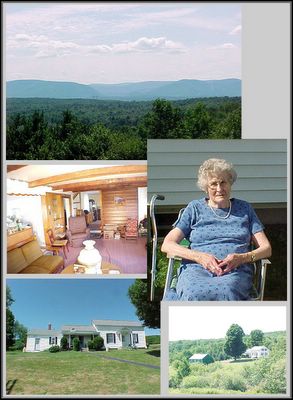
Grandma...
On Hubbard Hill
Catskill Mountains hazy blue green
Sittin' on the porch
Smoke in the fresh air, cut grass
Scary well cover,
Uncles singing with guitars
Family talking
Cousins together
Musty smell of the house
Crooked floors, hand hewn beams
Cold root cellar, cuckoo clock
Family meal always with dessert
Grandma….
In the kitchen
Making fresh fruit cobblers
Pies in ten minutes
Busily planning the next meal
Working in the garden
Sweet corn, cucumbers and tomatoes
Laughing with the grand kids
Religiously attending Flat Creek Baptist
White steeple with hymns leaking out
Dry preachers, friendly people
Grandma….
Brushing out her long hair at night
Wearing short dresses with skinny legs
Farmer's wife, married 53 years
Hardworking
Her children born at home
Sending $2 for every birthday
Making my wedding dress
Grandma…..
Traditional woman's role
Center of family in Gilboa
Strong Christian Warrior
Quoting God's word
Passing on her Christian Legacy
Through generations
To her daughter
To me
Wednesday partly cloudy 60's no wind. Carol still home from school but felling better. I ironed.
Comment: And from her oldest granddaughter another tribute:
Grandma by Marna Suzann Ford

Grandma...
On Hubbard Hill
Catskill Mountains hazy blue green
Sittin' on the porch
Smoke in the fresh air, cut grass
Scary well cover,
Uncles singing with guitars
Family talking
Cousins together
Musty smell of the house
Crooked floors, hand hewn beams
Cold root cellar, cuckoo clock
Family meal always with dessert
Grandma….
In the kitchen
Making fresh fruit cobblers
Pies in ten minutes
Busily planning the next meal
Working in the garden
Sweet corn, cucumbers and tomatoes
Laughing with the grand kids
Religiously attending Flat Creek Baptist
White steeple with hymns leaking out
Dry preachers, friendly people
Grandma….
Brushing out her long hair at night
Wearing short dresses with skinny legs
Farmer's wife, married 53 years
Hardworking
Her children born at home
Sending $2 for every birthday
Making my wedding dress
Grandma…..
Traditional woman's role
Center of family in Gilboa
Strong Christian Warrior
Quoting God's word
Passing on her Christian Legacy
Through generations
To her daughter
To me
Saturday, October 27, 2012
Tuesday, October 27, 1964 The Frances Hubbard Diaires
October 27, 1964
Tuesday, beautiful day, 60's. Clifton, Carol and I went to Cobleskill for unemployment and groceries. We ate at Brooks. Clifton went to union meeting at night. LaVerne and Roberta came up and brought me a Teflon frying pan for my birthday.
Comment: This would have been Mom's fifty first birthday, all of her children and many of her grandchildren are either approaching or have surpassed this age....
"How did it get late so soon?" Dr Seuss...
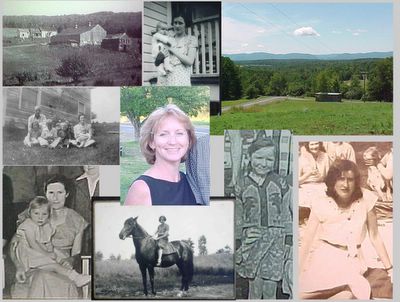
The Life of Frances Marietta Barber Hubbard, as seen through the eyes of her youngest daughter, Susan Frances Hubbard (Reynolds) Ciacci – June, 2005.
Frances Marietta Barber Hubbard, born at home in the Pine Grove area of Huntersland - on October 27, 1913, the Town of Middleburgh, Schoharie County, New York, died in the hospital at Banning, California, on Wednesday, June 1, 2005.
Frances grew up as an only child until her mid 20’s. Her Uncle Maynard Laraway, her mother’s brother, called her “fluffy” because her hair was just that, fluffy.
Her childhood was somewhat privileged, as her father who was an only child himself inherited the family farm, which was prosperous for the times and the area.
Frances attended and had birthday parties, and spent lots of time with her cousins, Emma and Marion. Summer weekends were spent with her parents, aunts and uncles and family friends at Crystal Lake, picnicking.
She attended school in Middleburgh, where she would spend her weekdays with her “Grandma Barber” (her father’s mother), whom she loved and whom she described as having everything “just so”, right down to her starched dresses and collars. She was not the academic student that her cousin Emma was, but she loved geography, to draw and sketch, and later in life spent many hours reading.
Mom’s parents divorced when she was 16 – a scandal it was – her father Clarence marrying her mother Bessie’s younger sister Mildred Laraway, and her mother Bessie Claressa Laraway marrying Norman VanTassel, another farmer and friend of the family, who had once been married to Bessie’s cousin. All four persons accompanied each other to Las Vegas for the divorce and remarriage of the new couples.
In later years, after Mom had a child or two of her own, along came a half-sister, Judith Barber, whom Mom also loved, but with whom never established a close relationship, as she had her own family to tend to.
The Laraway sisters kept a close bind with each other despite the scandal, and with the rest of their brothers and sisters, and their friendships and relationships continued the rest of their lives. Their lives had changed, but they still were accepted by each other.
But, for Mom, although she visited with her family back and forth as though all was well, she was wounded from the shame and embarrassment it had caused her at the tender age of 16, and I don’t believe she ever really recovered from that fully.
Frances loved to dance and at about that time, it was at a dance in Livingstonville, New York, that she met Clifton John Hubbard, and soon they married, Clifton being 25 years old, Frances being18 years old . They moved to a little home in Gilboa, New York, which was recently the Gilboa Post Office, just across from the Gilboa Dam.
The Hubbards said Frances brought life to the family. Indeed she did. She was the mother of 8 children, had 28 grandchildren, and 23 great-grandchildren at the time of her death, June 1, 2005.
Eventually she and Dad decided to move to one of the houses on the old Hubbard homestead on Hubbard Hill, the house Grandma Anna Christianna Hubbard lived in, where Anna raised her two sons, Grandpa Elmer and Uncle John. Frances and Clifton moved there when their family was still small.
At that time the house had no running water, indoor plumbing, and no electricity. When asked how she felt about that move, Mom replied that it didn’t bother her one bit. She said she had all of the strength and courage in the world.
Her life on Hubbard Hill was simple, yet busy and complex: Being married to Dad, and raising eight children, (all healthy and well, for which she as always so thankful, the boys running wild in the woods, “little devil-catchers” she would call them, with a hint of fun in her voice, and a spark in her eyes), was not an easy task, but was one for which she had tons of strength and which became most of her world.
Blessed with long arms that stretched out to her many children and grandchildren, and large hands to do the endless duties of a housewife and mother in the early 1900’s.
At times carrying water from the barn in milk pails, hoeing a rock-hard garden, roaming through the fields and woods with her children, picking wild blueberries, blackberries, and wild strawberries to make cobblers and pies, and hulling those tiny field strawberries and making an old fashioned strawberry shortcake for her family.
Her pies were plentiful and delicious, and sometimes a little unique, creating sour cream pies and sweet apple pies and current pies. In the earlier years, she would make a cake daily, to top off our supper meal she served to her large hungry bunch.
She kept a good, attractive house on meager finances, doing spring cleaning each year, wallpapering at least one room each year, and sometimes many, painting, washing, cooking and sewing for her children, dresses and skirts for the girls, embroidering dresser scarves, crocheting afghans for each child’s household, quilting blankets for grandchildren; canning vegetables, tomatoes, corn, fruits such as peaches and pears, preparing jams and jellies, relish, pickles, beet relish, homemade chili sauce, and French kraut, all stored in the cellar, some in large crocks, or in the old jelly cabinet that Grandma Anna used, and on the shelves in the cellar way.
She was always afraid when company came, that she would not have enough food to eat, which was never the case, as she always had an excess of food for her occasional guests and family.
In the winter she would stoke the fire, and make sure the heating cable was plugged in so the water wouldn’t freeze.
She worked on the farm with Dad, milking cows, tending the chickens, replacing endless numbers of window panes broken by thrown baseballs and maybe a rock or two here and there, and gathering eggs.
She would patch the house and porch with her hammer and nails, grow tall red Hollyhocks, drive fast to neighboring towns to shop, and told of the beautiful Nippon China set she once owned – it being broken as one of her children climbed up on top of the china cabinet for some candy, and tipping over the cabinet, breaking all of the contents – including her Nippon China!
On Saturday morning she would be busy making her pies or cakes, rolls and cinnamon buns for her family to devour on the weekends, and in earlier years grabbing a chicken, chopping off it’s head, and dressing it for dinner the next day, as Sunday morning would be spent in church, Flat Creek Baptist, hearing the Word of God.
Washing she did on Mondays, as most efficient homemakers did in those days, with an old wringer washer, loads and loads, first the whites, then colors, then darks, tee shirts and jeans hanging on the yards and yards of clothesline. Modest she was: When she hung up the underwear, she’d hang a washcloth with them to cover them up from the sight of any neighbors that might happen by. (All of two neighbors, the bus driver and the mailman!)
Truly, some days the only people she saw with the exception of her beloved children’s faces, would be the mailman – Wally Stryker, and the school bus driver, Claude Castle, who drove each one of her eight children to Gilboa Conesville Central School, where we all attended kindergarten through 12th grade.
Burning the trash was sometimes a memorable event, as on at least two occasions, Mom “set the field up back on fire”. While burning the trash the wind picked up an ember from the burn barrel and carried it into the huge field behind the house. Brooms and shovels, and daughter Sue, among others helped beat out the fire, which one time burned acres of field, which necessitated calling the Conesville Fire Department to assist. But, by the time they arrived (15 minutes later) the fire-fighting Hubbards had it all under control!
Mom’s religious experience as a child and teen was at the Dutch Reformed Church in Middleburgh, which, she would say in later life, “didn’t amount to anything”. As she raised her family she had a longing for something in her life and soul, and began reading “The Sword of the Lord” newspaper and attending Flat Creek Baptist Church and finally found the longing of her heart – her Lord Jesus Christ.
Her faith grew and she became an active member at Flat Creek, teaching Sunday School, active with the ladies Missionary Meetings, Donation Suppers, and Vacation Bible School, teaming up with Lavilla Kingsley or Evelyn Bailey to teach. She was faithful at Sunday Night services and mid week Prayer Meetings as well. Her purpose on Earth was being fulfilled.
She told us that in her younger years she could “swear up a storm”, but that all changed as her heart was touched by the transforming love shown to her by her Savior.
She played the piano some and would accompany Carol and me as we practiced to sing at church services on Sundays, or when the rest of the family would gather around an old piano with missing ivories, and out-of-tune keys, and sing old hymns or old songs from sheet music she stumbled through at the keyboard.
I had the privilege of witnessing one Sunday Evening Church Service, when sophisticated Pastor Hiltsley giving his sermon said something about egg yolks and Mom gagged, and her close somewhat impish friend Lavilla Kingsley sitting with her in the pew, gave out a snicker, and the two Flat Creek Baptist women in their mid-fifties, got to laughing so hard, that the sophisticated preacher had to stop his sermon!
Mom was very attractive and slender, 5’3”, small to medium framed, with long dark brown hair she pinned up on her head and striking bright blue eyes. Except for her persistent migraine headaches and undiagnosed scoliosis, she possessed good health.
She was somewhat proud, and always conscious about her looks and her hair, and would whip up a dress or apron for herself (in earlier years from feed sack cloth) in no time. I used to call her a fabric addict. She loved going to the fabric store to buy cloth.
When meeting others, she would seem aloof, but not because she thought herself better than others, but that she was a little unsure of herself. But, as her few select true friends got to know her, they saw the rich quality of this selfless person.
She was embarrassed sometimes though, I believe, around the Barber side of the family of the disheveled shape the farm became during the 40’s and 50’s, and dreaded telling her mother (who had only one child) that “she was pregnant again”.
She wasn’t one to have long labored conversations with the neighbors or anyone really, pouring out her heart. She would just say what she had to, and then get on back to work – doing something – getting something accomplished. One saying of hers, among many, was “never put off ‘til tomorrow what you can do today”. She loved to work. It defined who she was – her accomplishments.
And she told me once, “never tell anyone what you don’t want the whole world to know”. She was also discrete.
But Mom secretly wished to be a man, (Go figure! Can you imagine that?!! With all of the demands as a wife, mother, and woman with a large family and her migraine racked head), and to be a carpenter. She loved a hammer and nails. I’m sure the nails that were driven in her Savior’s hands and feet were especially meaningful to her.
Of all of her prayers that went up to heaven every day for her family, the most important one to her was that they would all be “saved”. She became very concerned and grieved at times over certain couples of her family, as marriages failed and divorces became final, but would always accept a new spouse as one of us.
She “preached and harped” as my brothers would say, at her family of her convictions and the things she thought were wrong with our lives. She would have her little scripture verse, or religious saying posted on the wall next to the door, so that when members of her beloved family went by the doorway, they couldn’t help but glance at it. Right there, staring us in the face – warning, pleading, encouraging, inspiring.
She had very few luxuries in her life compared to a lot of other women, and certainly nothing in comparison to what we have today, including leisure time. And some days her migraine headaches would rage, and leave her sick in bed for hours and recovering for days.
But I only know of one time when she didn’t/couldn’t get out of bed in the morning when Dad did to fix him breakfast, and send him off work and start her day.
Frances grew to hate the consumption of alcohol of any kind, by any one. She left Dad a time or two as well, as his disposition from drinking was too much to bear.
But you know, she returned and fulfilled her commitment to her husband.
I’m told at the beginning of their marriage they loved each other, and I have to say in the last years they found comfort with one another. But I think they had several years when their relationship was a struggle, and displays of affection toward each other are absent from my recollection growing up, but that wasn’t the custom of that day anyway. This would have been a topic never discussed back then.
Her luxuries were trips across country to California, Ohio, Niagara Falls and Florida to see her children and grandchildren; the Sundays after church, as she prepared huge, delicious meals for her family as we would all gather upon the farm with our spouses and our children, and the joy of her heart was that (with the exception of Dear Roberta) we were all well , and that we were there to spend some time with her and each other - these were her blessings.
Mom loved each one of her grandchildren, step grandchildren, and great-grandchildren –each one being naughty, and unique. She would “baby sit” the ones near by and the bond between grandmother and grandchild was great.
Among the multitude of things Mom taught me, she taught me to drive, and to sew. She sang nursery rhymes to me as a child when I was lonely or sad, and when I was eight years old, while tucking me into bed one night, told me that Jesus died on the cross for me, so that I could be forgiven of my sins, and someday to go Heaven to be with Him.
She was lots of times my best friend, and some times the last person in the world I wanted to know something.
Frances’ mother, Bessie Clarissa Laraway Barber VanTassel, whom Mom loved dearly and was devoted to, lived the remaining five or so years of her life with Mom and Dad, Mom “seeing to” her aging Mother.
During that time Dad had a stroke and for 10 years was a partial invalid himself.
Grandma Bessie died, Dad died, and Mom remained on the Hill ((some say the God-Forsaken Hill), but to her it wasn’t God forsaken.
She found God there, while sitting on the porch, looking at the majestic view of the mountains and valley, watching and feeding the birds, peering out the back windows at the deer and wild turkeys, seeing the autumn colors of the woods, watching the weather move in from the West: snow storms, howling winds, pouring rain, and dark sunless days, seeing rainbows and so often a breathtaking sunset.
It was her home – where she found consolation from her hard work, rest, comfort, sometimes loneliness, but mostly contentment and peace. She also renewed her friendship with Aunt Ella & Maude Haskin to the point where they were called the "Three Musketeers" by some of locals.
Until she could not be alone any more, and the same courage and spirit that took her to Hubbard Hill, took her to California to live with her daughter Marilyn where she lived five more years. And the sense of contentment she learned on Hubbard Hill saw her through to the end of her life.
She lived the last three years in a nursing home, her little body increasingly weakening, in California, far away from New York, still contented at her existence even though she became a total invalid in her last months from osteoporosis, an immensely enlarged heart, lungs laboring often with pneumonia and finally failed kidneys.
She died on Wednesday, June 1, 2005, at age 91.
Oh, I will never be the strong woman my mother was. I can never tell of the positive influences she had on me, her family, her neighborhood and the world.
This world will be less of a place – Hubbard Hill will never be the same – after having women like Grandma Anna Christianna Hubbard, Grandma Agnes Haskins, and Frances Marietta Barber Hubbard walk those fields and hills, and now, having them absent from it.
But Heaven is richer. God has another of his Chosen with Him now.


Tuesday, beautiful day, 60's. Clifton, Carol and I went to Cobleskill for unemployment and groceries. We ate at Brooks. Clifton went to union meeting at night. LaVerne and Roberta came up and brought me a Teflon frying pan for my birthday.
Comment: This would have been Mom's fifty first birthday, all of her children and many of her grandchildren are either approaching or have surpassed this age....
"How did it get late so soon?" Dr Seuss...
Susan's Memories Of Her Mother
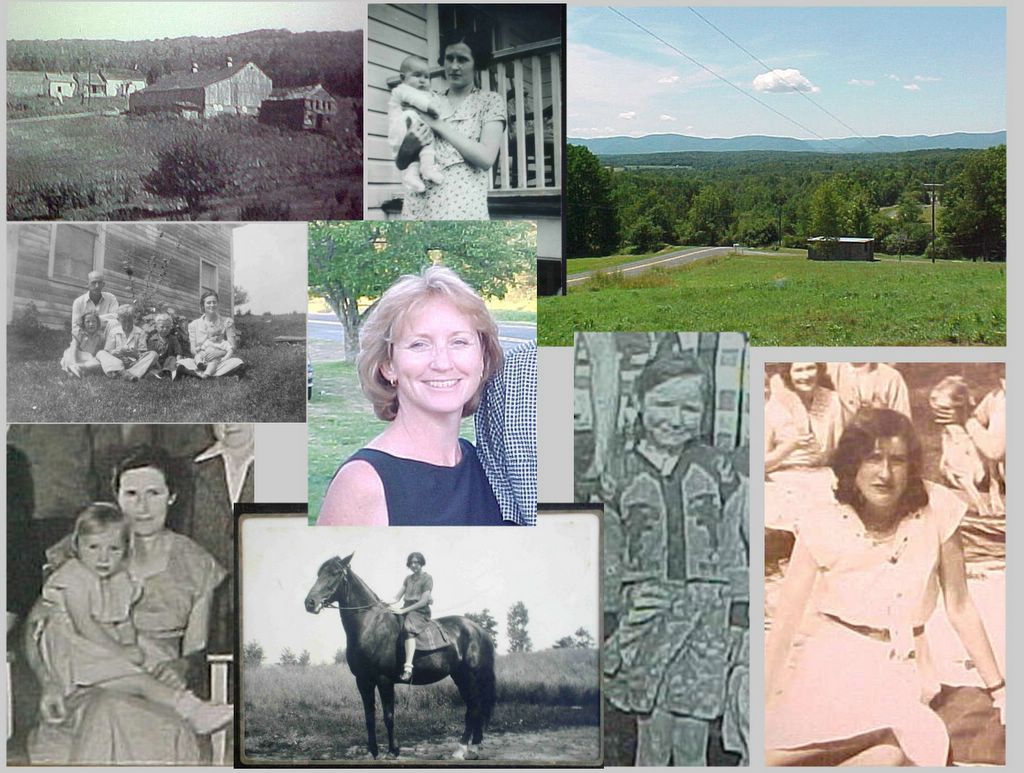
The Life of Frances Marietta Barber Hubbard, as seen through the eyes of her youngest daughter, Susan Frances Hubbard (Reynolds) Ciacci – June, 2005.
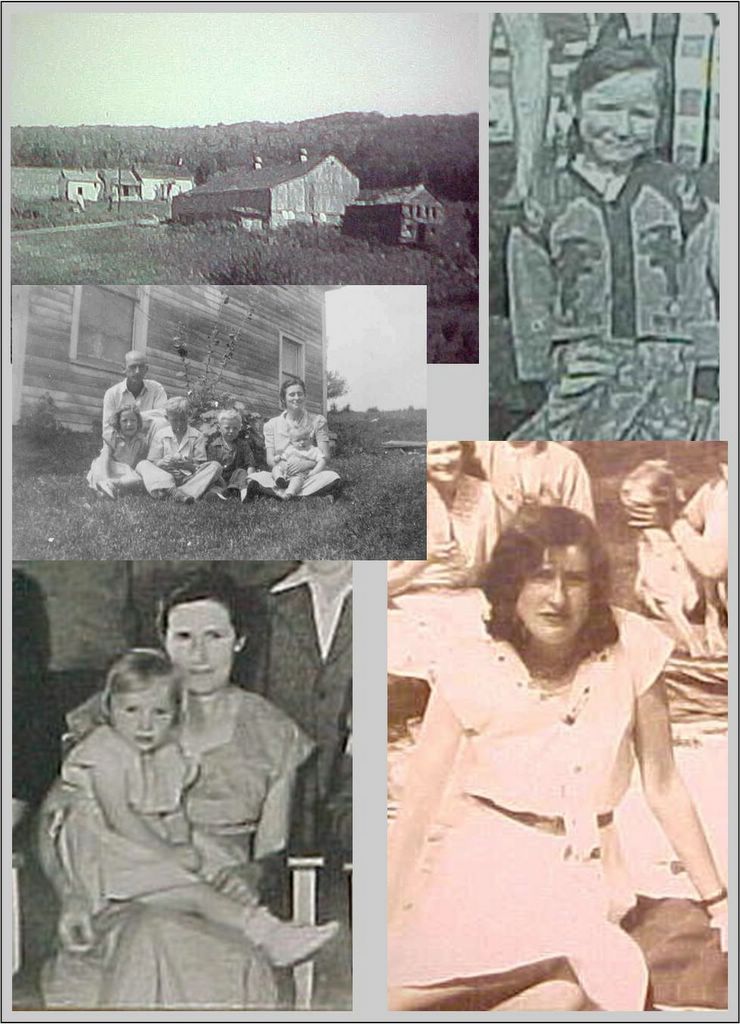
Frances Marietta Barber Hubbard, born at home in the Pine Grove area of Huntersland - on October 27, 1913, the Town of Middleburgh, Schoharie County, New York, died in the hospital at Banning, California, on Wednesday, June 1, 2005.
Frances grew up as an only child until her mid 20’s. Her Uncle Maynard Laraway, her mother’s brother, called her “fluffy” because her hair was just that, fluffy.
Her childhood was somewhat privileged, as her father who was an only child himself inherited the family farm, which was prosperous for the times and the area.
Frances attended and had birthday parties, and spent lots of time with her cousins, Emma and Marion. Summer weekends were spent with her parents, aunts and uncles and family friends at Crystal Lake, picnicking.
She attended school in Middleburgh, where she would spend her weekdays with her “Grandma Barber” (her father’s mother), whom she loved and whom she described as having everything “just so”, right down to her starched dresses and collars. She was not the academic student that her cousin Emma was, but she loved geography, to draw and sketch, and later in life spent many hours reading.
Mom’s parents divorced when she was 16 – a scandal it was – her father Clarence marrying her mother Bessie’s younger sister Mildred Laraway, and her mother Bessie Claressa Laraway marrying Norman VanTassel, another farmer and friend of the family, who had once been married to Bessie’s cousin. All four persons accompanied each other to Las Vegas for the divorce and remarriage of the new couples.
In later years, after Mom had a child or two of her own, along came a half-sister, Judith Barber, whom Mom also loved, but with whom never established a close relationship, as she had her own family to tend to.
The Laraway sisters kept a close bind with each other despite the scandal, and with the rest of their brothers and sisters, and their friendships and relationships continued the rest of their lives. Their lives had changed, but they still were accepted by each other.
But, for Mom, although she visited with her family back and forth as though all was well, she was wounded from the shame and embarrassment it had caused her at the tender age of 16, and I don’t believe she ever really recovered from that fully.
Frances loved to dance and at about that time, it was at a dance in Livingstonville, New York, that she met Clifton John Hubbard, and soon they married, Clifton being 25 years old, Frances being18 years old . They moved to a little home in Gilboa, New York, which was recently the Gilboa Post Office, just across from the Gilboa Dam.
The Hubbards said Frances brought life to the family. Indeed she did. She was the mother of 8 children, had 28 grandchildren, and 23 great-grandchildren at the time of her death, June 1, 2005.
Eventually she and Dad decided to move to one of the houses on the old Hubbard homestead on Hubbard Hill, the house Grandma Anna Christianna Hubbard lived in, where Anna raised her two sons, Grandpa Elmer and Uncle John. Frances and Clifton moved there when their family was still small.
At that time the house had no running water, indoor plumbing, and no electricity. When asked how she felt about that move, Mom replied that it didn’t bother her one bit. She said she had all of the strength and courage in the world.
Her life on Hubbard Hill was simple, yet busy and complex: Being married to Dad, and raising eight children, (all healthy and well, for which she as always so thankful, the boys running wild in the woods, “little devil-catchers” she would call them, with a hint of fun in her voice, and a spark in her eyes), was not an easy task, but was one for which she had tons of strength and which became most of her world.
Blessed with long arms that stretched out to her many children and grandchildren, and large hands to do the endless duties of a housewife and mother in the early 1900’s.
At times carrying water from the barn in milk pails, hoeing a rock-hard garden, roaming through the fields and woods with her children, picking wild blueberries, blackberries, and wild strawberries to make cobblers and pies, and hulling those tiny field strawberries and making an old fashioned strawberry shortcake for her family.
Her pies were plentiful and delicious, and sometimes a little unique, creating sour cream pies and sweet apple pies and current pies. In the earlier years, she would make a cake daily, to top off our supper meal she served to her large hungry bunch.
She kept a good, attractive house on meager finances, doing spring cleaning each year, wallpapering at least one room each year, and sometimes many, painting, washing, cooking and sewing for her children, dresses and skirts for the girls, embroidering dresser scarves, crocheting afghans for each child’s household, quilting blankets for grandchildren; canning vegetables, tomatoes, corn, fruits such as peaches and pears, preparing jams and jellies, relish, pickles, beet relish, homemade chili sauce, and French kraut, all stored in the cellar, some in large crocks, or in the old jelly cabinet that Grandma Anna used, and on the shelves in the cellar way.
She was always afraid when company came, that she would not have enough food to eat, which was never the case, as she always had an excess of food for her occasional guests and family.
In the winter she would stoke the fire, and make sure the heating cable was plugged in so the water wouldn’t freeze.
She worked on the farm with Dad, milking cows, tending the chickens, replacing endless numbers of window panes broken by thrown baseballs and maybe a rock or two here and there, and gathering eggs.
She would patch the house and porch with her hammer and nails, grow tall red Hollyhocks, drive fast to neighboring towns to shop, and told of the beautiful Nippon China set she once owned – it being broken as one of her children climbed up on top of the china cabinet for some candy, and tipping over the cabinet, breaking all of the contents – including her Nippon China!
On Saturday morning she would be busy making her pies or cakes, rolls and cinnamon buns for her family to devour on the weekends, and in earlier years grabbing a chicken, chopping off it’s head, and dressing it for dinner the next day, as Sunday morning would be spent in church, Flat Creek Baptist, hearing the Word of God.
Washing she did on Mondays, as most efficient homemakers did in those days, with an old wringer washer, loads and loads, first the whites, then colors, then darks, tee shirts and jeans hanging on the yards and yards of clothesline. Modest she was: When she hung up the underwear, she’d hang a washcloth with them to cover them up from the sight of any neighbors that might happen by. (All of two neighbors, the bus driver and the mailman!)
Truly, some days the only people she saw with the exception of her beloved children’s faces, would be the mailman – Wally Stryker, and the school bus driver, Claude Castle, who drove each one of her eight children to Gilboa Conesville Central School, where we all attended kindergarten through 12th grade.
Burning the trash was sometimes a memorable event, as on at least two occasions, Mom “set the field up back on fire”. While burning the trash the wind picked up an ember from the burn barrel and carried it into the huge field behind the house. Brooms and shovels, and daughter Sue, among others helped beat out the fire, which one time burned acres of field, which necessitated calling the Conesville Fire Department to assist. But, by the time they arrived (15 minutes later) the fire-fighting Hubbards had it all under control!
Mom’s religious experience as a child and teen was at the Dutch Reformed Church in Middleburgh, which, she would say in later life, “didn’t amount to anything”. As she raised her family she had a longing for something in her life and soul, and began reading “The Sword of the Lord” newspaper and attending Flat Creek Baptist Church and finally found the longing of her heart – her Lord Jesus Christ.
Her faith grew and she became an active member at Flat Creek, teaching Sunday School, active with the ladies Missionary Meetings, Donation Suppers, and Vacation Bible School, teaming up with Lavilla Kingsley or Evelyn Bailey to teach. She was faithful at Sunday Night services and mid week Prayer Meetings as well. Her purpose on Earth was being fulfilled.
She told us that in her younger years she could “swear up a storm”, but that all changed as her heart was touched by the transforming love shown to her by her Savior.
She played the piano some and would accompany Carol and me as we practiced to sing at church services on Sundays, or when the rest of the family would gather around an old piano with missing ivories, and out-of-tune keys, and sing old hymns or old songs from sheet music she stumbled through at the keyboard.
I had the privilege of witnessing one Sunday Evening Church Service, when sophisticated Pastor Hiltsley giving his sermon said something about egg yolks and Mom gagged, and her close somewhat impish friend Lavilla Kingsley sitting with her in the pew, gave out a snicker, and the two Flat Creek Baptist women in their mid-fifties, got to laughing so hard, that the sophisticated preacher had to stop his sermon!
Mom was very attractive and slender, 5’3”, small to medium framed, with long dark brown hair she pinned up on her head and striking bright blue eyes. Except for her persistent migraine headaches and undiagnosed scoliosis, she possessed good health.
She was somewhat proud, and always conscious about her looks and her hair, and would whip up a dress or apron for herself (in earlier years from feed sack cloth) in no time. I used to call her a fabric addict. She loved going to the fabric store to buy cloth.
When meeting others, she would seem aloof, but not because she thought herself better than others, but that she was a little unsure of herself. But, as her few select true friends got to know her, they saw the rich quality of this selfless person.
She was embarrassed sometimes though, I believe, around the Barber side of the family of the disheveled shape the farm became during the 40’s and 50’s, and dreaded telling her mother (who had only one child) that “she was pregnant again”.
She wasn’t one to have long labored conversations with the neighbors or anyone really, pouring out her heart. She would just say what she had to, and then get on back to work – doing something – getting something accomplished. One saying of hers, among many, was “never put off ‘til tomorrow what you can do today”. She loved to work. It defined who she was – her accomplishments.
And she told me once, “never tell anyone what you don’t want the whole world to know”. She was also discrete.
But Mom secretly wished to be a man, (Go figure! Can you imagine that?!! With all of the demands as a wife, mother, and woman with a large family and her migraine racked head), and to be a carpenter. She loved a hammer and nails. I’m sure the nails that were driven in her Savior’s hands and feet were especially meaningful to her.
Of all of her prayers that went up to heaven every day for her family, the most important one to her was that they would all be “saved”. She became very concerned and grieved at times over certain couples of her family, as marriages failed and divorces became final, but would always accept a new spouse as one of us.
She “preached and harped” as my brothers would say, at her family of her convictions and the things she thought were wrong with our lives. She would have her little scripture verse, or religious saying posted on the wall next to the door, so that when members of her beloved family went by the doorway, they couldn’t help but glance at it. Right there, staring us in the face – warning, pleading, encouraging, inspiring.
She had very few luxuries in her life compared to a lot of other women, and certainly nothing in comparison to what we have today, including leisure time. And some days her migraine headaches would rage, and leave her sick in bed for hours and recovering for days.
But I only know of one time when she didn’t/couldn’t get out of bed in the morning when Dad did to fix him breakfast, and send him off work and start her day.
Frances grew to hate the consumption of alcohol of any kind, by any one. She left Dad a time or two as well, as his disposition from drinking was too much to bear.
But you know, she returned and fulfilled her commitment to her husband.
I’m told at the beginning of their marriage they loved each other, and I have to say in the last years they found comfort with one another. But I think they had several years when their relationship was a struggle, and displays of affection toward each other are absent from my recollection growing up, but that wasn’t the custom of that day anyway. This would have been a topic never discussed back then.
Her luxuries were trips across country to California, Ohio, Niagara Falls and Florida to see her children and grandchildren; the Sundays after church, as she prepared huge, delicious meals for her family as we would all gather upon the farm with our spouses and our children, and the joy of her heart was that (with the exception of Dear Roberta) we were all well , and that we were there to spend some time with her and each other - these were her blessings.
Mom loved each one of her grandchildren, step grandchildren, and great-grandchildren –each one being naughty, and unique. She would “baby sit” the ones near by and the bond between grandmother and grandchild was great.
Among the multitude of things Mom taught me, she taught me to drive, and to sew. She sang nursery rhymes to me as a child when I was lonely or sad, and when I was eight years old, while tucking me into bed one night, told me that Jesus died on the cross for me, so that I could be forgiven of my sins, and someday to go Heaven to be with Him.
She was lots of times my best friend, and some times the last person in the world I wanted to know something.
Frances’ mother, Bessie Clarissa Laraway Barber VanTassel, whom Mom loved dearly and was devoted to, lived the remaining five or so years of her life with Mom and Dad, Mom “seeing to” her aging Mother.
During that time Dad had a stroke and for 10 years was a partial invalid himself.
Grandma Bessie died, Dad died, and Mom remained on the Hill ((some say the God-Forsaken Hill), but to her it wasn’t God forsaken.
She found God there, while sitting on the porch, looking at the majestic view of the mountains and valley, watching and feeding the birds, peering out the back windows at the deer and wild turkeys, seeing the autumn colors of the woods, watching the weather move in from the West: snow storms, howling winds, pouring rain, and dark sunless days, seeing rainbows and so often a breathtaking sunset.
It was her home – where she found consolation from her hard work, rest, comfort, sometimes loneliness, but mostly contentment and peace. She also renewed her friendship with Aunt Ella & Maude Haskin to the point where they were called the "Three Musketeers" by some of locals.
Until she could not be alone any more, and the same courage and spirit that took her to Hubbard Hill, took her to California to live with her daughter Marilyn where she lived five more years. And the sense of contentment she learned on Hubbard Hill saw her through to the end of her life.
She lived the last three years in a nursing home, her little body increasingly weakening, in California, far away from New York, still contented at her existence even though she became a total invalid in her last months from osteoporosis, an immensely enlarged heart, lungs laboring often with pneumonia and finally failed kidneys.
She died on Wednesday, June 1, 2005, at age 91.
Oh, I will never be the strong woman my mother was. I can never tell of the positive influences she had on me, her family, her neighborhood and the world.
This world will be less of a place – Hubbard Hill will never be the same – after having women like Grandma Anna Christianna Hubbard, Grandma Agnes Haskins, and Frances Marietta Barber Hubbard walk those fields and hills, and now, having them absent from it.
But Heaven is richer. God has another of his Chosen with Him now.
Friday, October 26, 2012
Monday, October 26, 1964 The Frances Hubbard Diaries
October 26, 1964
Monday, beautiful, warm, sunny day, 60. I did big wash. Carol home from school sick. Clifton called at Oneonta and they accepted loan. He went to Schoharie in pm to get papers up to date.
Comment: Not sure what the loan is about..."but always short of money, couldn't by most things for cash
 And there always were a lot more days than dollars in our stash"....The Milk Check...
Monday, beautiful, warm, sunny day, 60. I did big wash. Carol home from school sick. Clifton called at Oneonta and they accepted loan. He went to Schoharie in pm to get papers up to date.
Comment: Not sure what the loan is about..."but always short of money, couldn't by most things for cash

Thursday, October 25, 2012
Sunday, October 25, 1964 The Frances Hubbard Diaries
October 25, 1964
Sunday, lovely day. Sue and I went to church. Gerald, Mary Ann, Doug, LaVerne, Roberta, Mother and Norm here for dinner. Took Carol to Dr. Palen 4 pm. he couldn't find anything wrong. Sue went to church at night. Wayne and Laura took her down. Heard Mr and Mrs. Seabury had been killed in Utah Saturday night.
 Comment: The family gathered because Mom's birthday is on the 27th....vaguely remember the car accident that killed the Seaburys....went away on a trip and never came back....here is a picture of Frances in 1954, to her left Aunt Madeline, to her right Winifred...the half a kid is Rudy Earl Blaksley, Winifred's oldest.....
Sunday, lovely day. Sue and I went to church. Gerald, Mary Ann, Doug, LaVerne, Roberta, Mother and Norm here for dinner. Took Carol to Dr. Palen 4 pm. he couldn't find anything wrong. Sue went to church at night. Wayne and Laura took her down. Heard Mr and Mrs. Seabury had been killed in Utah Saturday night.

Wednesday, October 24, 2012
Saturday, October 24, 1964 The Frances Hubbard Diaries
October 24, 1964
Saturday, cloudy, cool. Carol still not feeling well. Wayne and Clifton cut a load of wood in the am. The girls, Clifton and I went to Prattsville in pm after a few groceries. Boys went out at night. Gerald stayed at Mary Ann's. My stomach some better.
 Comment: Busy weekend.......the wood cutting never ends.....from Hubbard Hill Memories:
In the winter it was cold as hell and every week the boys as well
As Dad would go to cut some firewood
With that old Farmall and Mall chainsaw
We'd find a tree and make a fall
And cut it up as quickly as we could
Cause the winter wind and chill was bearing down
As we struggled in that cold and muddy ground
Then we loaded up a half a cord and shivered while the tractor roared and took us tired half-frozen homeward bound.....
Saturday, cloudy, cool. Carol still not feeling well. Wayne and Clifton cut a load of wood in the am. The girls, Clifton and I went to Prattsville in pm after a few groceries. Boys went out at night. Gerald stayed at Mary Ann's. My stomach some better.
In the winter it was cold as hell and every week the boys as well
As Dad would go to cut some firewood
With that old Farmall and Mall chainsaw
We'd find a tree and make a fall
And cut it up as quickly as we could
Cause the winter wind and chill was bearing down
As we struggled in that cold and muddy ground
Then we loaded up a half a cord and shivered while the tractor roared and took us tired half-frozen homeward bound.....
Subscribe to:
Posts (Atom)
2 comments:
Thank you for sharing.