Tuesday, May 27, 2008
Surprise!
A woman swimmer from Toledo is recovering after a pelican apparently diving for fish slammed into her. The Fire Department Chief says he had never heard of a diving pelican colliding with anyone. The swimmer needed 20 stitches. The bird died. The Plain Dealer, Sunday, May 11, 2008
Son Of A Bitch!
The pelican thought
When his beak was a foot from her head
“I thought it was Walleye or juicy Brown Trout!
And then in an instant was dead.
Son Of A Bitch!
The young woman cried
When she felt the sharp crack to her head.
“Someone threw a rock from a bridge or a boat!”
In an instant, the water turned red.
Son Of A Bitch!
The rescue tech said
When he saw what had all gone amiss.
“It’s really absurd to be mugged by a bird
Who was thinking your head was a fish!”
Son Of A Bitch!
I said as I read that rather unfortunate tome
When topic is right, it’s easy to write
An ornithological poem


Wednesday, May 14, 2008
The Spring Lot

The “Spring Lot” was three acres out southeast across the road
Beyond the “crik” with minnows, frogs, the barnyard with its loads
Some years we’d plant Sudan Grass, tall, billows, green, in waves
In other years, we planted corn. Between the rows, dark caves
Lairs, from which we’d “hide n’ seek” and hunt for dangerous game
The rustling winds and dank dark earth held fears we couldn’t name
The lot was close and in full view of folks from our front porch
And through the trembling grass or corn, light flickered, as a torch
One day I lay beside the spring in warm and tender sun
And overturned a rock to watch the insects’ frantic run
I pondered their perceptions in a world I couldn’t see
And wondered if their eyes and minds could see that it was “ME”
The “ME” who made the calls about their right to live or die
I thought that this was how we were when looked at through God’s eyes
And then I saw wild strawberries, a sweet and tangy taste
And left that rock turned over, the insects to their fate
I often think, if there be gods, they must be like a child
Playing in a “Spring Lot” while we skitter, scared and wild
They'll never know the why, the what, the wonder of our days
'cause all they see are strawberries and blithely move away
Thursday, May 08, 2008
South Mountain

South Mountain loomed, its camel’s hump a background for our days,
Was always there, foul wind or fair, it seemed to draw our gaze.
Its deep, dense woods with square hay-lots embedded in its hide,
Hid narrow roads that tunneled through just barely one-car wide.
Before electric lights came in, in nineteen forty six,
That mountain brooded in the night as by the River Styx.
My Dad and Uncles talked of ghosts, strange beings wrapped in white
That roamed those steep and winding roads on windy, rainy nights.
They spoke of driving home one night late from a Windham dance.
The drinks, the rain, their lights through trees, all put them in a trance.
The whole car saw this white-robed girl who walked the road that night,
And they never wondered why she walked or if she was alright.
Till several miles down the road they turned and started back,
And all they saw in headlight-glare was empty, narrow track.
No sign of footsteps, gaps or trails, or paths that she could take,
Just glistening leaves and swirling trees and nothing in her wake.
They drove on home to Hubbard Hill and put up for the night.
Their sleep of dreams with spectral themes and vague and floating fright.
They told this story many times, with lots of sheepish grins,
And wondered why they drove on by and where their minds had been.
South Mountain still holds sway today, the hay lots all grown in,
The mountain face all forest now, its woods more dark and dim.
My Dad and Uncles all gone now, I miss their tales and talk,
And wonder if that lonesome wraith still walks her lonesome walk.
I wonder, does that lonely girl still walk her lonesome walk?
Thursday, April 03, 2008
Expectations
 Dad, Mom, David John, Wayne Morris, Douglas Maynard
 1947 Gilboa New York
Ruminations At 70
I’m looking at their picture and am wondering if I had
Ever met the expectations of my mother and my dad
When looking back a past events, it seems it went quite well,
Though my mother and my sisters always said I’d go to hell
‘Cause I didn't have much faith in those things I couldn’t see
And that’s why the Flat Creek Baptist Church saw less and less of me.
As the magazines and books I read took me ‘round the world
And then at twelve, I recognized those things out there called girls.
About sixteen, the cigarettes and beers were all the rage
As I watched James Dean and Elvis rock the movies and the stage
Through high school and first college my folks helped me do alright,
Though the switchblade from Ft. Wayne caused my Dad a sleepless night
When he saw it in the attic on the dresser by my bed
And he asked me what the hell was going on there in my head
After that, I joined the Army, then college and career
I’m looking at their picture and am wondering if I had
Ever met the expectations of my mother and my dad
When looking back a past events, it seems it went quite well,
Though my mother and my sisters always said I’d go to hell
‘Cause I didn't have much faith in those things I couldn’t see
And that’s why the Flat Creek Baptist Church saw less and less of me.
As the magazines and books I read took me ‘round the world
And then at twelve, I recognized those things out there called girls.
About sixteen, the cigarettes and beers were all the rage
As I watched James Dean and Elvis rock the movies and the stage
Through high school and first college my folks helped me do alright,
Though the switchblade from Ft. Wayne caused my Dad a sleepless night
When he saw it in the attic on the dresser by my bed
And he asked me what the hell was going on there in my head
After that, I joined the Army, then college and career
And wife and kids and family and now old age is here
When I think about my parents, my emotions ebb and tide
When I think about my parents, my emotions ebb and tide
And I hope I didn’t scare them much on my erratic ride
And ‘though they never said too much no matter what I did
I think they felt the same as I when watching both my kids
I hope they felt the same as I when watching both my kids…….
And ‘though they never said too much no matter what I did
I think they felt the same as I when watching both my kids
I hope they felt the same as I when watching both my kids…….
Thursday, March 27, 2008
50,000 Names

There’s teddy bears and high school rings
Old photographs that mommies bring
Of daddies with their young boys playing ball
There’s combat boots he used to wear
When he was sent over there
And there’s 50,000 names carved in the wall
There’s cigarettes and cans of beer
And notes that say “I miss you dear”
And children that don’t say anything at all
There’s Purple Hearts and packs of gum
Fatherless daughters and motherless sons
And there’s 50,000 names carved in the wall
They come from all across our land
In pickup trucks and mini-vans
Searching for a boy from long ago
They scan the wall and find his name
The teardrops fall like pouring rain ...
Old photographs that mommies bring
Of daddies with their young boys playing ball
There’s combat boots he used to wear
When he was sent over there
And there’s 50,000 names carved in the wall
There’s cigarettes and cans of beer
And notes that say “I miss you dear”
And children that don’t say anything at all
There’s Purple Hearts and packs of gum
Fatherless daughters and motherless sons
And there’s 50,000 names carved in the wall
They come from all across our land
In pickup trucks and mini-vans
Searching for a boy from long ago
They scan the wall and find his name
The teardrops fall like pouring rain ...
Then silently they leave a gift and go ..........
There’s Stars Of David and Rosary beads
And Crucifixion figurines
And flowers of all colors large and small
There’s a Boy Scout badge and a merit pin
Little American Flags waving in the wind
And there’s 50,000 names carved in the wall
There’s 50,000 names carved in the wall
Viet Nam became a member of the World Trade Organization January 11, 2007 and is now a
Most Favored Nation
trading partner with the United States
50,000 Names Lyrics By George Jones
Wednesday, January 16, 2008

Tuesday, December 25, 2007

Thursday, December 13, 2007

Sunday, October 07, 2007
Town Team Baseball 1928: Three Hubbard Brothers

From Left To Right: Merel Hubbard, John Henry Briggs,
Clifton Hubbard, (My dad) & Earle Hubbard. 1928
Dad was 20, Earle 18 & Merel about 23.
How the Current Hubbard Males May
Have Come By Their (Almost )Insufferable Cockiness.
From Maude Haskin As Quoted In The Fall
From Maude Haskin As Quoted In The Fall
2007 Issue Of The Gilboa Historical Society:
“One time after a game, some of the boys had all the girls line up by the pavilion, and they chose three to go with them to Proctor’s Theatre in Schenectady to see movie. The three, Earle Hubbard, Clifton Hubbard and Everett Wood. The lucky girls were Margie DeWitt, Lorraine Hubbard & Maude Haskin. The fellows told the other girls to go home. Everyone at the theatre looked at them like they were big-league ball players as they were wearing their uniforms and spikes.
For supper they pooled their money and bought Fig Newtons and bananas.
( Always the big spenders)
Everett Wood married Lorraine Hubbard, I think Clifton probably took Maude and Earle took Margie Dewitt.
“One time after a game, some of the boys had all the girls line up by the pavilion, and they chose three to go with them to Proctor’s Theatre in Schenectady to see movie. The three, Earle Hubbard, Clifton Hubbard and Everett Wood. The lucky girls were Margie DeWitt, Lorraine Hubbard & Maude Haskin. The fellows told the other girls to go home. Everyone at the theatre looked at them like they were big-league ball players as they were wearing their uniforms and spikes.
For supper they pooled their money and bought Fig Newtons and bananas.
( Always the big spenders)
Everett Wood married Lorraine Hubbard, I think Clifton probably took Maude and Earle took Margie Dewitt.
Saturday, September 22, 2007
My 27 Rules & Facts Of Life
27 Rules, Facts & Admonitions To Help You Reach The Point Of Being Old & Grey And Playing With Your Grandchildren (Which Is Probably The Point Of It All Anyway)
Eighty-Four and holding through this briefest flick of time
Still alive and kicking with more living on my mind
Because I’ve made it this far, I think I might have earned
The leave to let you know some things, important, that I’ve learned
1. Don’t hurt yourself or others, (this rule's among the stronger)
2. And figure everything you plan will cost more and take longer
3. If said “It’s not the money”, it’s the money I will bet you
4. If you think you’ll win in Vegas, there’s a bridge that I can get you
5. If your only tool’s a hammer, every problem seems a nail
6. If you think you’ll beat the system, I’ll come visit you in jail
7. The world will always be full up with lying politicians
8. If you walk in other’s moccasins, you’ll probably change positions
9. Each day will start much better if you see the morning dew
10. Make sure you teach your children they can love rich people too
11. When you deal with kids & old folks, you should opt for being kind
12. And men, you’re just not smart enough to know what’s on her mind
13. Don’t point a gun at anything you don’t intend to shoot
14. All guns are always loaded
15. The gun laws all are moot
16. Astrology, the drug war, and ghosts are all just bunk
17. There’s no “good” war,
18. You'l always lose, squabbling with a skunk
19. Eat to live, don’t live to eat,
20. Keep kids away from strangers
21. And just because you’re not afraid don't mean a lessened danger
22. There’s always someone tougher, smarter, meaner on the street
23. When your face is at a huge stone wall, the smart move’s to retreat
24. You’ll count your wealth much better by the things you live without
25. And lots of times a whisper works much better than a shout
26. Live to learn, you’ll learn to live, and dying’s part of life
27. Make sure the best friends that you have are husband, kids, and wife
That’s all I have to say right now, I hope it’s not too weighty
I’ll let you know more things I’ve learned the day that I turn ninety.
I’ll let you know more things I’ve learned the day that I turn ninety.
Saturday, August 18, 2007
Siblings & Cousins Among The Flowers

Gerald Elmer & Marilyn Ann Hubbard, Glenn & Barry Taylor
Probably About 1943. Back Then, We Also Had Flowers In
Our Hair But Did Not Really Know It Was Cool.....
Saturday, August 11, 2007

Thursday, June 14, 2007
Elise Roberts Hubbard: New Family Collage

She was born on June 11 at 12:42pm, and
weighed in at 8lbs 4 oz.
Craig, Brinton, Hayden, Elise & bottom right,
Rowan with his new cousin.
Rowan is the son of Abbey & Matt Clark,
Brinton's brother.
Tuesday, June 12, 2007
Elise Roberts Hubbard

Born June 11, 2007. Sister Of Hayden Clark Hubbard, Daughter Of Craig Evan Hubbard & Brinton Clark Hubbard
Tuesday, June 05, 2007
Me, LaVerne & Franklin Brown

Me, LaVerne & Franklin Brown
The first five bucks I ever earned was for selling scrap iron with LaVerne that we hauled in a 1919 Model T
Me, LaVerne and Franklin Brown searched farmer’s dumps all over town and picked up every piece of scrap we’d see
Franklin Brown smoked cigarettes when just a kid but I forget which brand of those damned cancer sticks he chose
At three am he’d come awake and grab that pack and then he’d take deep drags and you could smell it in his clothes
His dad had driven my dad’s trucks and one day had the worst bad luck to ditch a truck with a full load of cement
The load broke loose and hit the cab and crushed the chest of Franklin’s dad on the steering wheel which wasn’t even bent
We worked the spring of forty nine, I close my eyes and see those times and the memories we picked up just to sell
Worn out plows and sickle bars, tractor wheels with rotten tires and every piece of scrap had tales to tell
Of farmers dreams and farmers dreads as they worked their lives out in those sheds and hay fields in the shadow of those hills
Getting by on hope and sweat and doing all they could to get the family fed and pay the monthly bills
Milking cows and cutting corn, till old and sick and bent and worn and living every moment just on will
Shirley Richmond comes to mind, all stoved in and face all lined, he worked that farm on the road to Manorkill
I’ve made a little money since, in the third world I could be a prince, but I still can feel and smell those crisp new bills
My brother paid to Frank and me beside that black old Model T in 1949 on Hubbard Hill.
Tuesday, April 03, 2007

Sunday, April 01, 2007

Sunday, February 25, 2007
Otis and Myrtie

https://soundcloud.com/gerry-hubbard/otemyrtie
Otis & Myrtie
Ote and Myrtie were our neighbors up the road a quarter mile
Spinster maid and bachelor brother and you seldom saw them smile
Pinched lips, all prim and proper, all clothes buttoned to the top
But always free and easy with the rumors they would drop
Myrtie was a teacher long retired but taught in church
While Otis ran some “young stock” and I guess he never worked
Got the mumps when just a child and my Dad said they “moved down”
He said that was the reason that no children were around
'Cause I always thought them married when I saw them on the road
In that pretty two-door Chevy with their monthly grocery load
We usually did not see or hear them very much at all
‘Less our cows got in their garden then we’d get an angry call
Us kids and Dad would get the cows and try to fix the fence
But for gardens ruined and trampled, there is no recompense
“Good fences make good neighbors” are the words of Robert Frost
And we should have kept them better no matter what the cost
Then I get a slightest comfort when I think about it all
He also wrote “Something there is that doesn’t love a wall”.
Mending Wall
Something there is that doesn't love a wall,
That sends the frozen-ground-swell under it
And spills the upper boulder in the sun,
And makes gaps even two can pass abreast.
The work of hunters is another thing:
I have come after them and made repair
Where they have left not one stone on a stone,
But they would have the rabbit out of hiding,
To please the yelping dogs. The gaps I mean,
No one has seen them made or heard them made,
But at spring mending-time we find them there,
I let my neighbor know beyond the hill;
And on a day we meet to walk the line
And set the wall between us once again.
We keep the wall between us as we go.
To each the boulders that have fallen to each.
And some are loaves and some so nearly balls
We have to use a spell to make them balance:
"Stay where you are until our backs are turned!"
We wear our fingers rough with handling them.
Oh, just another kind of outdoor game,
One on a side. It comes to little more:
There where it is we do not need the wall:
He is all pine and I am apple orchard.
My apple trees will never get across
And eat the cones under his pines, I tell him.
He only says, "Good fences make good neighbors."
Spring is the mischief in me, and I wonder
If I could put a notion in his head:
"Why do they make good neighbors? Isn't it
Where there are cows? But here there are no cows.
Before I built a wall I'd ask to know
What I was walling in or walling out,
And to whom I was like to give offense.
Something there is that doesn't love a wall,
That wants it down." I could say "Elves" to him,
But it's not elves exactly, and I'd rather
He said it for himself. I see him there,
Bringing a stone grasped firmly by the top
In each hand, like an old-stone savage armed.
He moves in darkness as it seems to me,
Not of woods only and the shade of trees.
He will not go behind his father's saying,
And he likes having thought of it so well
He says again, "Good fences make good neighbors.”
Robert Frost
Thursday, February 15, 2007
Uncle Clarence
Uncle Clarence could wield a splitting axe like Rembrandt used a brush
Split wood outside in the winter cold and never seemed to rush
He’d pick a block and set it straight then peer through squinted eyes
Then one quick flick with a single blade and a stove-sized chunk would fly
He’d size things up, another swing, and as the axe head hit
He would twist the blade to the outside edge and another chunk was split
Another flick on the other side and another piece would fall
He always used a single blade, abhorred a wedge or maul
He’d smoothly work around that block, axe flashing in the light
And he never had to hit it twice, he always hit just right
Precise and quickly fluid, split lots of wood and yet
All afternoon, he never stopped and hardly broke a sweat.
“Chop wood and carry water” are words that come from Zen
I understand that meaning now by thinking back to when
Uncle Clarence with axe and “Dickies” in that beech-wood forest stand
Worked mind and soul and body to that simple task at hand
Thursday, February 08, 2007
Winter Mornings

Winter Mornings Original by Gerry Hubbard
Winter Mornings
We boys slept in the attic on that Catskill Mountain Farm
And though the rain and snow blew in it seemed to cause no harm
We’d get up winter mornings, shake the snow off of our beds
Then grab our clothes and run downstairs where that old wood stove was fed
We’d dress as fast as young kids could, we pulled on several layers
And “Sword Of The Lord” from the radio blared out those Baptist prayers
Mom would bake some pancakes, fry up some ham and eggs
Then we brushed our teeth in the kitchen sink from the brushes hung on pegs
The only running water from the hand pump by the sink
We used to wash ourselves and cook and fill the pail to drink
We finally put a bathroom in when I was seventeen
But with ceiling low, you had to squat to get remotely clean
When younger, all us kids would group around the kitchen stove
And huddle with the oven open, as scents of wood smoke wove
All through the house and smells of ham and pancakes filled the air
I close my eyes, recall it all, it’s like I’m standing there
Marilyn fell flat-palmed one time upon that sizzling iron
And burned her hands with blisters while the rest of us looked on
She couldn’t balance, put her hands down several times at least
Till Mother finally grabbed her and salved her hands with grease
Those winter mornings come to me in Ohio winter’s cold
And seem to keep their clarity even as I grow more old
And the fireplace that burns with gas in our modern family room
Seems not as warm as that old stove on that run-down family farm.
We used to wash ourselves and cook and fill the pail to drink
We finally put a bathroom in when I was seventeen
But with ceiling low, you had to squat to get remotely clean
When younger, all us kids would group around the kitchen stove
And huddle with the oven open, as scents of wood smoke wove
All through the house and smells of ham and pancakes filled the air
I close my eyes, recall it all, it’s like I’m standing there
Marilyn fell flat-palmed one time upon that sizzling iron
And burned her hands with blisters while the rest of us looked on
She couldn’t balance, put her hands down several times at least
Till Mother finally grabbed her and salved her hands with grease
Those winter mornings come to me in Ohio winter’s cold
And seem to keep their clarity even as I grow more old
And the fireplace that burns with gas in our modern family room
Seems not as warm as that old stove on that run-down family farm.
Friday, October 27, 2006
Mom's Sixteenth Birthday Party
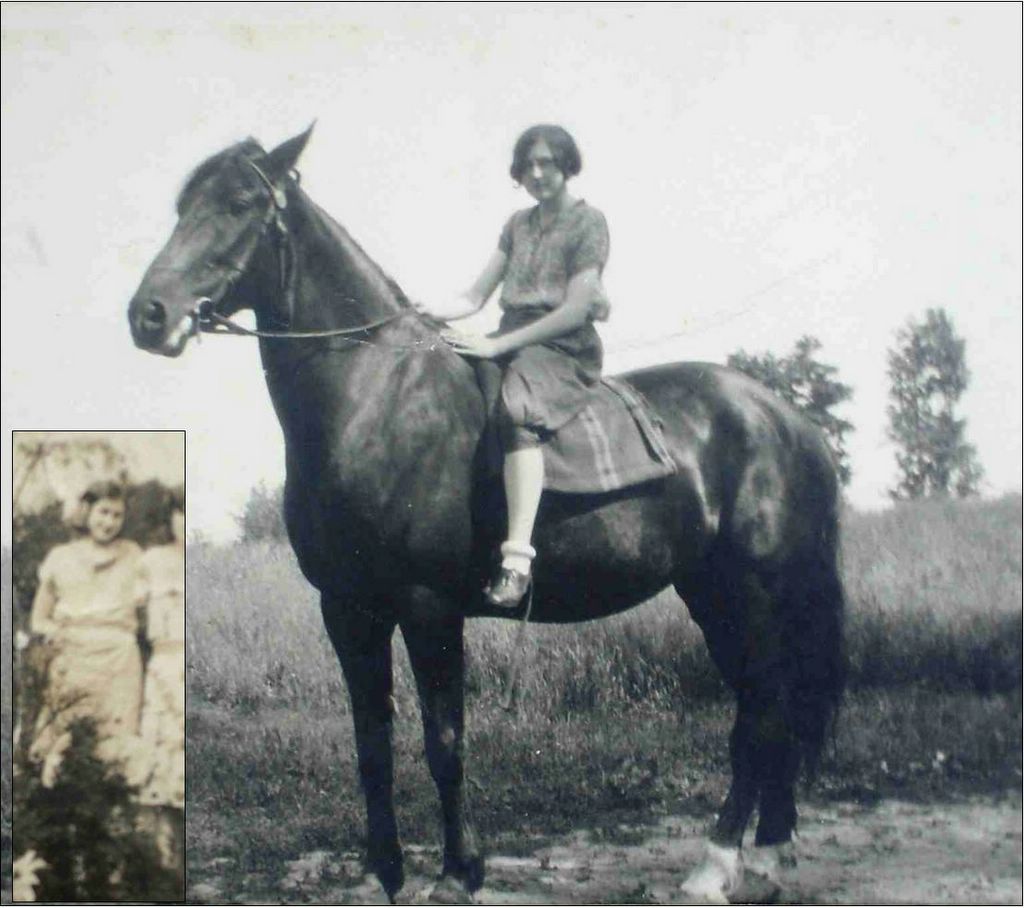
Mom's Sixteenth Birthday Party

Middleburg News, October 27th, 1929
Miss Frances Barber Given Birthday Surprise
A birthday surprise party was given by Mr. and Mrs. Clarence Barber at their home last Friday evening in honor of the sixteenth birthday of their daughter, Frances.
She had been away for the afternoon so was very much surprised on returning to find about thirty guests there to greet her.
However, she entered into the fun at once. Everyone had a very enjoyable time during the evening due to the hospitality of the Barber family.
Most of the time was spent in playing games, singing and dancing. Toward the latter part of the evening Frances took time to open the many lovely and useful gifts which she received.,
A lovely lunch was then served which carried out an orange and black color scheme, as did the attractive decorations throughout the house, which were very appropriate because of the nearness of Halloween.
Soon after the guests departed wishing her many more such happy birthdays.
Those present were: Emma George, Beatrice George, Leah Brayman, Elizabeth Thorington, Dorothy Rivenburg, Dorothy Engle, Ethel Reed, Belle Haskins, Maude Bailey, Evelyn Hubbard, Emma Tenblad, Marian Van Tassel, Neva Becker, Ruth MacDonald, Marguerite Meier, Julia Kane, Sara Gibbons, Ralph Cooke, Roland Shepard, Victor George, Clarence Earls, Raymond Earls, Clifton Hubbard, Almon Haskins, Alton Thorington, Maynard Laraway, Myron Stanley, Norman Van Tassel, Franz Rosenburg, Mrs. Grant Laraway, Mildred Laraway, Frances Barber, Mr. and Mrs. Clarence Barber.
Notes:
Attendee Maude Bailey married attendee Almon Haskins. Also, about this time, Bessie Laraway & Clarence Barber (Mr. & Mrs Clarence Barber) went to Reno for a divorce. Bessie then married party attendee Norman Van Tassel and Clarence married Bessie's sister, party attendee Mildred Laraway. Clarence and "Billy" also went to Reno with Bessie & Norm.
When she was eighteen, Frances married party attendee Clifton Hubbard. If anyone knows of more connections among the party attendees, please add them in the available "Comments" section. Gerry Hubbard
Grandma by Marna Suzann Ford

Grandma...
On Hubbard Hill
Catskill Mountains hazy blue green
Sittin' on the porch
Smoke in the fresh air, cut grass
Scary well cover,
Uncles singing with guitars
Family talking
Cousins together
Musty smell of the house
Crooked floors, hand hewn beams
Cold root cellar, cuckoo clock
Family meal always with dessert
Grandma….
In the kitchen
Making fresh fruit cobblers
Pies in ten minutes
Busily planning the next meal
Working in the garden
Sweet corn, cucumbers and tomatoes
Laughing with the grand kids
Religiously attending Flat Creek Baptist
White steeple with hymns leaking out
Dry preachers, friendly people
Grandma….
Brushing out her long hair at night
Wearing short dresses with skinny legs
Farmer's wife, married 53 years
Hardworking
Her children born at home
Sending $2 for every birthday
Making my wedding dress
Grandma…..
Traditional woman's role
Center of family in Gilboa
Strong Christian Warrior
Quoting God's word
Passing on her Christian Legacy
Through generations
To her daughter
To me

Susan's Memories Of Her Mother
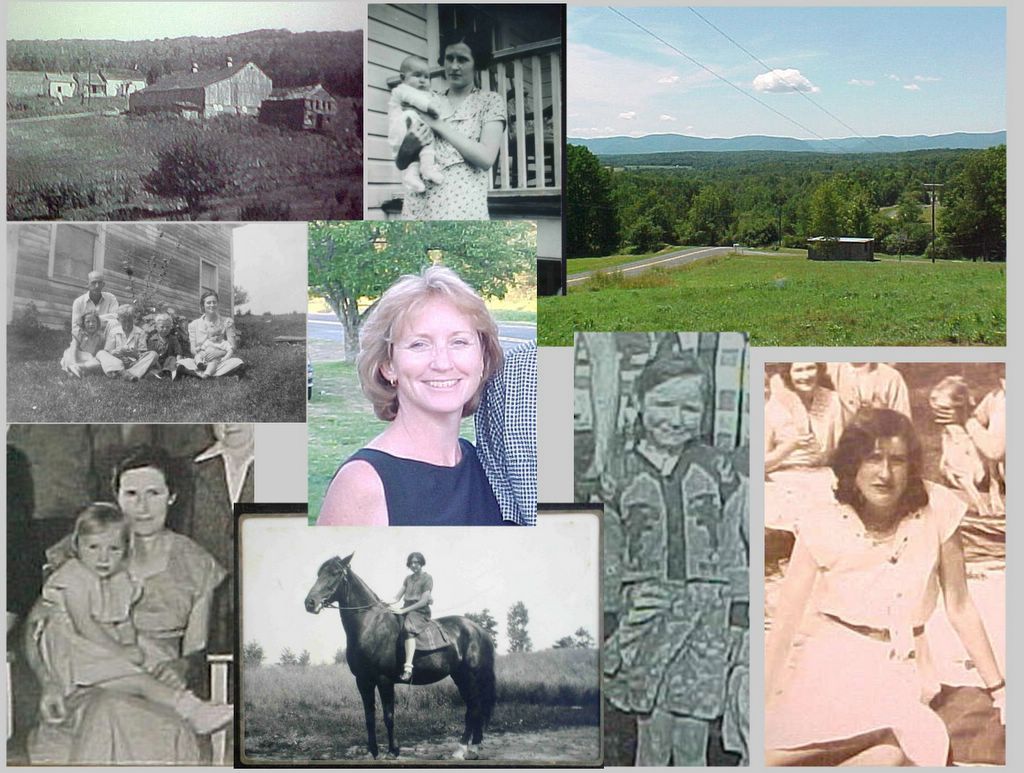
The Life of Frances Marietta Barber Hubbard, as seen through the eyes of her youngest daughter, Susan Frances Hubbard (Reynolds) Ciacci – June, 2005.
Frances Marietta Barber Hubbard, born at home in the Pine Grove area of Huntersland - on October 27, 1913, the Town of Middleburgh, Schoharie County, New York, died in the hospital at Banning, California, on Wednesday, June 1, 2005.
Frances grew up as an only child until her mid 20’s. Her Uncle Maynard Laraway, her mother’s brother, called her “fluffy” because her hair was just that, fluffy.
Her childhood was somewhat privileged, as her father who was an only child himself inherited the family farm, which was prosperous for the times and the area.
Frances attended and had birthday parties, and spent lots of time with her cousins, Emma and Marion. Summer weekends were spent with her parents, aunts and uncles and family friends at Crystal Lake, picnicking.
She attended school in Middleburgh, where she would spend her weekdays with her “Grandma Barber” (her father’s mother), whom she loved and whom she described as having everything “just so”, right down to her starched dresses and collars. She was not the academic student that her cousin Emma was, but she loved geography, to draw and sketch, and later in life spent many hours reading.
Mom’s parents divorced when she was 16 – a scandal it was – her father Clarence marrying her mother Bessie’s younger sister Mildred Laraway, and her mother Bessie Claressa Laraway marrying Norman VanTassel, another farmer and friend of the family, who had once been married to Bessie’s cousin. All four persons accompanied each other to Las Vegas for the divorce and remarriage of the new couples.
In later years, after Mom had a child or two of her own, along came a half-sister, Judith Barber, whom Mom also loved, but with whom never established a close relationship, as she had her own family to tend to.
The Laraway sisters kept a close bind with each other despite the scandal, and with the rest of their brothers and sisters, and their friendships and relationships continued the rest of their lives. Their lives had changed, but they still were accepted by each other.
But, for Mom, although she visited with her family back and forth as though all was well, she was wounded from the shame and embarrassment it had caused her at the tender age of 16, and I don’t believe she ever really recovered from that fully.
Frances loved to dance and at about that time, it was at a dance in Livingstonville, New York, that she met Clifton John Hubbard, and soon they married, Clifton being 25 years old, Frances being18 years old . They moved to a little home in Gilboa, New York, which was recently the Gilboa Post Office, just across from the Gilboa Dam.
The Hubbards said Frances brought life to the family. Indeed she did. She was the mother of 8 children, had 28 grandchildren, and 23 great-grandchildren at the time of her death, June 1, 2005.
Eventually she and Dad decided to move to one of the houses on the old Hubbard homestead on Hubbard Hill, the house Grandma Anna Christianna Hubbard lived in, where Anna raised her two sons, Grandpa Elmer and Uncle John. Frances and Clifton moved there when their family was still small.
At that time the house had no running water, indoor plumbing, and no electricity. When asked how she felt about that move, Mom replied that it didn’t bother her one bit. She said she had all of the strength and courage in the world.
Her life on Hubbard Hill was simple, yet busy and complex: Being married to Dad, and raising eight children, (all healthy and well, for which she as always so thankful, the boys running wild in the woods, “little devil-catchers” she would call them, with a hint of fun in her voice, and a spark in her eyes), was not an easy task, but was one for which she had tons of strength and which became most of her world.
Blessed with long arms that stretched out to her many children and grandchildren, and large hands to do the endless duties of a housewife and mother in the early 1900’s.
At times carrying water from the barn in milk pails, hoeing a rock-hard garden, roaming through the fields and woods with her children, picking wild blueberries, blackberries, and wild strawberries to make cobblers and pies, and hulling those tiny field strawberries and making an old fashioned strawberry shortcake for her family.
Her pies were plentiful and delicious, and sometimes a little unique, creating sour cream pies and sweet apple pies and current pies. In the earlier years, she would make a cake daily, to top off our supper meal she served to her large hungry bunch.
She kept a good, attractive house on meager finances, doing spring cleaning each year, wallpapering at least one room each year, and sometimes many, painting, washing, cooking and sewing for her children, dresses and skirts for the girls, embroidering dresser scarves, crocheting afghans for each child’s household, quilting blankets for grandchildren; canning vegetables, tomatoes, corn, fruits such as peaches and pears, preparing jams and jellies, relish, pickles, beet relish, homemade chili sauce, and French kraut, all stored in the cellar, some in large crocks, or in the old jelly cabinet that Grandma Anna used, and on the shelves in the cellar way.
She was always afraid when company came, that she would not have enough food to eat, which was never the case, as she always had an excess of food for her occasional guests and family.
In the winter she would stoke the fire, and make sure the heating cable was plugged in so the water wouldn’t freeze.
She worked on the farm with Dad, milking cows, tending the chickens, replacing endless numbers of window panes broken by thrown baseballs and maybe a rock or two here and there, and gathering eggs.
She would patch the house and porch with her hammer and nails, grow tall red Hollyhocks, drive fast to neighboring towns to shop, and told of the beautiful Nippon China set she once owned – it being broken as one of her children climbed up on top of the china cabinet for some candy, and tipping over the cabinet, breaking all of the contents – including her Nippon China!
On Saturday morning she would be busy making her pies or cakes, rolls and cinnamon buns for her family to devour on the weekends, and in earlier years grabbing a chicken, chopping off it’s head, and dressing it for dinner the next day, as Sunday morning would be spent in church, Flat Creek Baptist, hearing the Word of God.
Washing she did on Mondays, as most efficient homemakers did in those days, with an old wringer washer, loads and loads, first the whites, then colors, then darks, tee shirts and jeans hanging on the yards and yards of clothesline. Modest she was: When she hung up the underwear, she’d hang a washcloth with them to cover them up from the sight of any neighbors that might happen by. (All of two neighbors, the bus driver and the mailman!)
Truly, some days the only people she saw with the exception of her beloved children’s faces, would be the mailman – Wally Stryker, and the school bus driver, Claude Castle, who drove each one of her eight children to Gilboa Conesville Central School, where we all attended kindergarten through 12th grade.
Burning the trash was sometimes a memorable event, as on at least two occasions, Mom “set the field up back on fire”. While burning the trash the wind picked up an ember from the burn barrel and carried it into the huge field behind the house. Brooms and shovels, and daughter Sue, among others helped beat out the fire, which one time burned acres of field, which necessitated calling the Conesville Fire Department to assist. But, by the time they arrived (15 minutes later) the fire-fighting Hubbards had it all under control!
Mom’s religious experience as a child and teen was at the Dutch Reformed Church in Middleburgh, which, she would say in later life, “didn’t amount to anything”. As she raised her family she had a longing for something in her life and soul, and began reading “The Sword of the Lord” newspaper and attending Flat Creek Baptist Church and finally found the longing of her heart – her Lord Jesus Christ.
Her faith grew and she became an active member at Flat Creek, teaching Sunday School, active with the ladies Missionary Meetings, Donation Suppers, and Vacation Bible School, teaming up with Lavilla Kingsley or Evelyn Bailey to teach. She was faithful at Sunday Night services and mid week Prayer Meetings as well. Her purpose on Earth was being fulfilled.
She told us that in her younger years she could “swear up a storm”, but that all changed as her heart was touched by the transforming love shown to her by her Savior.
She played the piano some and would accompany Carol and me as we practiced to sing at church services on Sundays, or when the rest of the family would gather around an old piano with missing ivories, and out-of-tune keys, and sing old hymns or old songs from sheet music she stumbled through at the keyboard.
I had the privilege of witnessing one Sunday Evening Church Service, when sophisticated Pastor Hiltsley giving his sermon said something about egg yolks and Mom gagged, and her close somewhat impish friend Lavilla Kingsley sitting with her in the pew, gave out a snicker, and the two Flat Creek Baptist women in their mid-fifties, got to laughing so hard, that the sophisticated preacher had to stop his sermon!
Mom was very attractive and slender, 5’3”, small to medium framed, with long dark brown hair she pinned up on her head and striking bright blue eyes. Except for her persistent migraine headaches and undiagnosed scoliosis, she possessed good health.
She was somewhat proud, and always conscious about her looks and her hair, and would whip up a dress or apron for herself (in earlier years from feed sack cloth) in no time. I used to call her a fabric addict. She loved going to the fabric store to buy cloth.
When meeting others, she would seem aloof, but not because she thought herself better than others, but that she was a little unsure of herself. But, as her few select true friends got to know her, they saw the rich quality of this selfless person.
She was embarrassed sometimes though, I believe, around the Barber side of the family of the disheveled shape the farm became during the 40’s and 50’s, and dreaded telling her mother (who had only one child) that “she was pregnant again”.
She wasn’t one to have long labored conversations with the neighbors or anyone really, pouring out her heart. She would just say what she had to, and then get on back to work – doing something – getting something accomplished. One saying of hers, among many, was “never put off ‘til tomorrow what you can do today”. She loved to work. It defined who she was – her accomplishments.
And she told me once, “never tell anyone what you don’t want the whole world to know”. She was also discrete.
But Mom secretly wished to be a man, (Go figure! Can you imagine that?!! With all of the demands as a wife, mother, and woman with a large family and her migraine racked head), and to be a carpenter. She loved a hammer and nails. I’m sure the nails that were driven in her Savior’s hands and feet were especially meaningful to her.
Of all of her prayers that went up to heaven every day for her family, the most important one to her was that they would all be “saved”. She became very concerned and grieved at times over certain couples of her family, as marriages failed and divorces became final, but would always accept a new spouse as one of us.
She “preached and harped” as my brothers would say, at her family of her convictions and the things she thought were wrong with our lives. She would have her little scripture verse, or religious saying posted on the wall next to the door, so that when members of her beloved family went by the doorway, they couldn’t help but glance at it. Right there, staring us in the face – warning, pleading, encouraging, inspiring.
She had very few luxuries in her life compared to a lot of other women, and certainly nothing in comparison to what we have today, including leisure time. And some days her migraine headaches would rage, and leave her sick in bed for hours and recovering for days.
But I only know of one time when she didn’t/couldn’t get out of bed in the morning when Dad did to fix him breakfast, and send him off work and start her day.
Frances grew to hate the consumption of alcohol of any kind, by any one. She left Dad a time or two as well, as his disposition from drinking was too much to bear.
But you know, she returned and fulfilled her commitment to her husband.
I’m told at the beginning of their marriage they loved each other, and I have to say in the last years they found comfort with one another. But I think they had several years when their relationship was a struggle, and displays of affection toward each other are absent from my recollection growing up, but that wasn’t the custom of that day anyway. This would have been a topic never discussed back then.
Her luxuries were trips across country to California, Ohio, Niagara Falls and Florida to see her children and grandchildren; the Sundays after church, as she prepared huge, delicious meals for her family as we would all gather upon the farm with our spouses and our children, and the joy of her heart was that (with the exception of Dear Roberta) we were all well , and that we were there to spend some time with her and each other - these were her blessings.
Mom loved each one of her grandchildren, step grandchildren, and great-grandchildren –each one being naughty, and unique. She would “baby sit” the ones near by and the bond between grandmother and grandchild was great.
Among the multitude of things Mom taught me, she taught me to drive, and to sew. She sang nursery rhymes to me as a child when I was lonely or sad, and when I was eight years old, while tucking me into bed one night, told me that Jesus died on the cross for me, so that I could be forgiven of my sins, and someday to go Heaven to be with Him.
She was lots of times my best friend, and some times the last person in the world I wanted to know something.
Frances’ mother, Bessie Clarissa Laraway Barber VanTassel, whom Mom loved dearly and was devoted to, lived the remaining five or so years of her life with Mom and Dad, Mom “seeing to” her aging Mother.
During that time Dad had a stroke and for 10 years was a partial invalid himself.
Grandma Bessie died, Dad died, and Mom remained on the Hill ((some say the God-Forsaken Hill), but to her it wasn’t God forsaken.
She found God there, while sitting on the porch, looking at the majestic view of the mountains and valley, watching and feeding the birds, peering out the back windows at the deer and wild turkeys, seeing the autumn colors of the woods, watching the weather move in from the West: snow storms, howling winds, pouring rain, and dark sunless days, seeing rainbows and so often a breathtaking sunset.
It was her home – where she found consolation from her hard work, rest, comfort, sometimes loneliness, but mostly contentment and peace. She also renewed her friendship with Aunt Ella & Maude Haskin to the point where they were called the "Three Musketeers" by some of locals.
Until she could not be alone any more, and the same courage and spirit that took her to Hubbard Hill, took her to California to live with her daughter Marilyn where she lived five more years. And the sense of contentment she learned on Hubbard Hill saw her through to the end of her life.
She lived the last three years in a nursing home, her little body increasingly weakening, in California, far away from New York, still contented at her existence even though she became a total invalid in her last months from osteoporosis, an immensely enlarged heart, lungs laboring often with pneumonia and finally failed kidneys.
She died on Wednesday, June 1, 2005, at age 91.
Oh, I will never be the strong woman my mother was. I can never tell of the positive influences she had on me, her family, her neighborhood and the world.
This world will be less of a place – Hubbard Hill will never be the same – after having women like Grandma Anna Christianna Hubbard, Grandma Agnes Haskins, and Frances Marietta Barber Hubbard walk those fields and hills, and now, having them absent from it.
But Heaven is richer. God has another of his Chosen with Him now.
The Passing
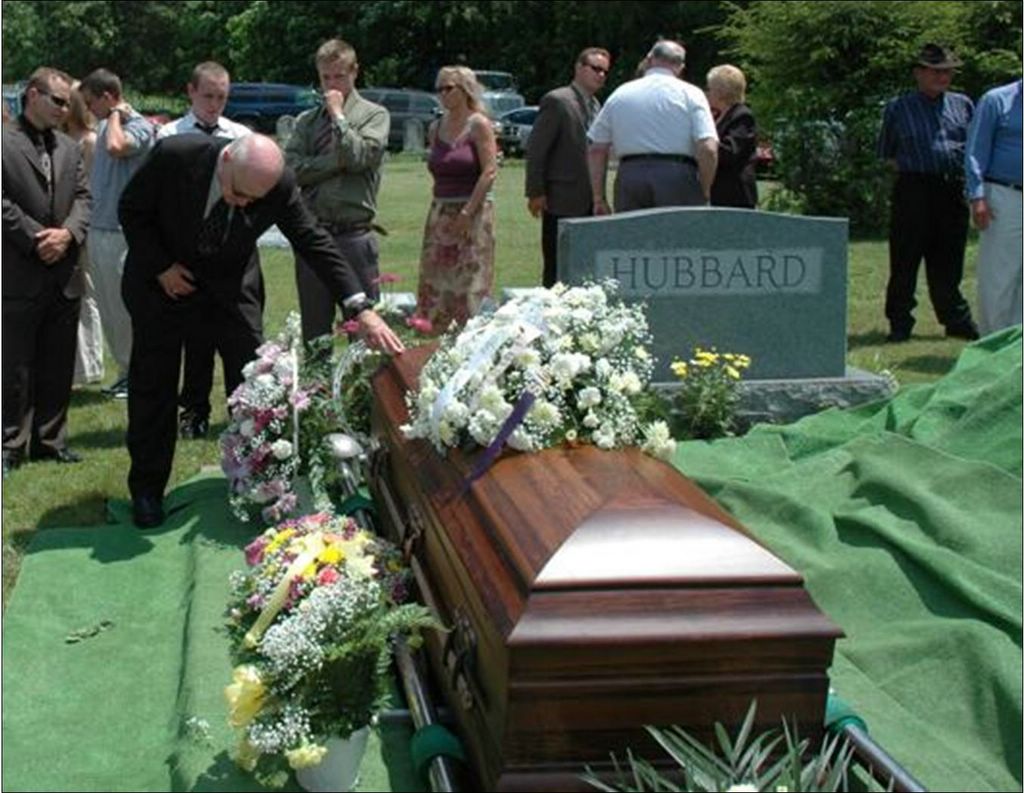
Frances Marietta Barber Hubbard, October 27, 1913-June 1, 2005
The tide recedes but leaves behind bright seashells in the sand
The sun goes down but gentle warmth still lingers on the land
The music stops and yet it echoes on in sweet refrain
For every thing that passes, something beautiful remains
......unknown
Sunday, October 15, 2006
He Was A Friend Of Mine....
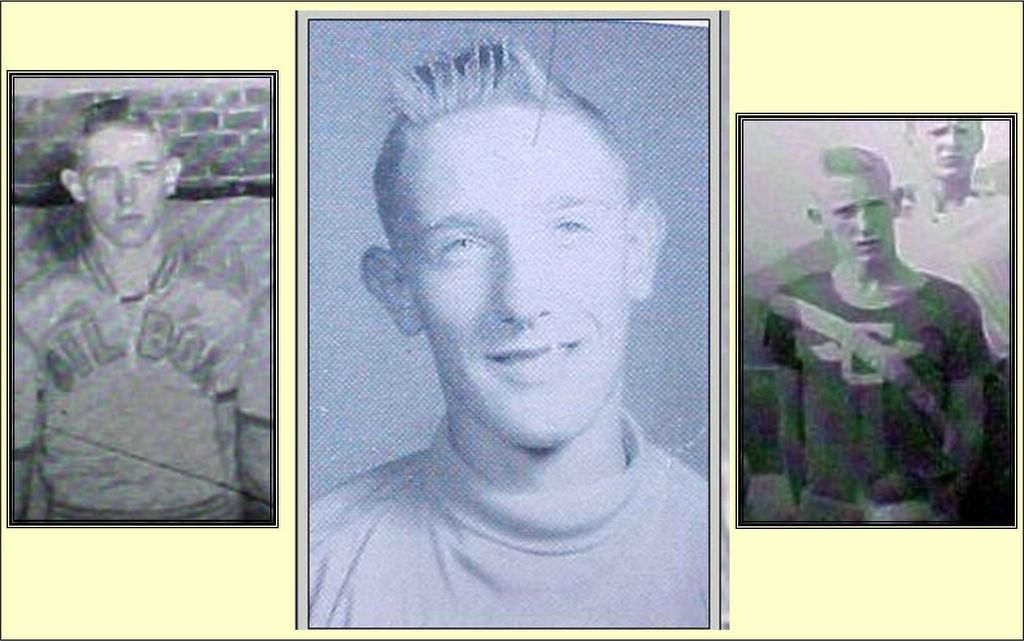
He Was A Friend Of Mine
"Sam The Man” we called him in those Catskill rolling hills
And though its fifty years ago, I picture him at will
A long and lean and lanky kid, fair skinned, blue eyes, blond hair
Raising hell and having fun, he’d take on any dare
As kids, we prowled those hills and towns in both our father’s cars
We “parked” and went to swimming holes, under-aged, we’d hit the bars
We’d go pick up “The Prattsville Girls”, we’d smoke and buy them shakes
Like devils, drive the fire roads in the hills behind Earl’s lake
His Dad had bought a ‘52, pale green, cool Pontiac
And I flipped a butt and burned a hole right through the seat in back.
We both played sports in high school, though he a year behind
Both dirt poor and scraggly, but we didn’t seem to mind
When he went in the Navy, I saw him just once more
On Haskin Hill, while both on leave, we swapped our service lore
But I often thought about him and the crazy times we had
From what I know it seems he had more good times than the bad
Then I look back and have regrets as everybody can,
I knew him only as a boy I never knew the man…..
Haskin, Leonard William "Sam"
23-Year Navy Veteran Retired From City Of Chattanooga
Leonard William "Sam" Haskin, 67, died on Thursday, Oct. 12, 2006, at his home.
He served 23 years in the U.S. Navy before retiring to Chattanooga.
He worked for the city of Chattanooga for the past 13 years.
He is survived by his loving wife of 45 years, Fay Henderson Haskin, of Chattanooga; daughter and son-in-law, Jacqueline and Kevin Smith, of Chattanooga; sons and daughters-in-law, Peter and Annette Haskin, of Ooltewah, Brent Haskin, of Chattanooga, Keith and Jeanne Haskin, of Dalton, Ga.; three grandchildren, Alex Smith, Zach Smith and Katie Haskin; brothers and sisters-in-law, Neil and Ruth Haskin, of Duanesburg, N.Y., Michael and Ruthy Haskin, of Southwick, Ma.; sisters, Charlotte Carlton, of Chattanooga, Joan Tiger, of Lexington Park, Md., and Peggy Harper, of Syracuse, N.Y.; and many nieces and nephews.
Graveside services will be at 10 a.m. Friday at Chattanooga National Cemetery with the Rev. Art Jones officiating and with full military honors. In lieu of flowers, donations may be made to Hospice of Chattanooga, 4355 Highway 58, Chattanooga, TN 37416.
Condolences may be sent at www.heritagefh.com.
Arrangements are by Heritage Funeral Home & Cremation Services,
7454 East Brainerd Road, Chattanooga, TN 37421.
Thursday, September 14, 2006

Sunday, September 10, 2006
Sunday, August 13, 2006
50 Years Ago: The Class Of 1956 Senior Picture
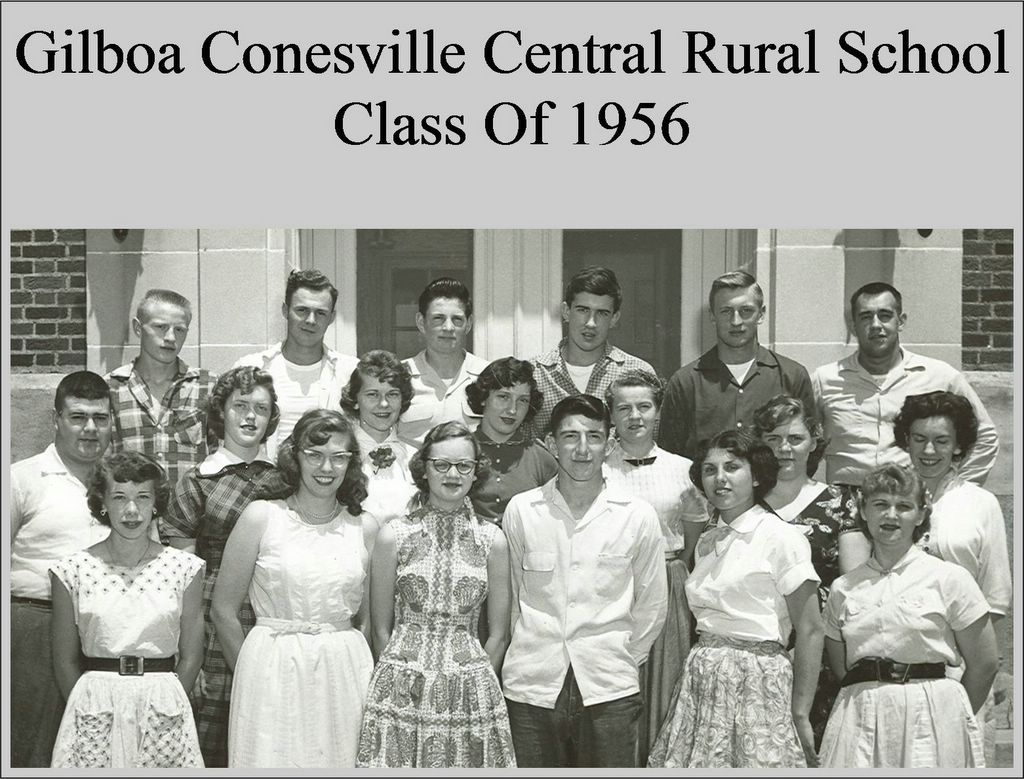
Row 1: Lucy Roe, Bonnie Brown, Joan Marquit, Bill Drebitko,
Camilla Acello, Rose Brainerd
Row 2: David Kishpaugh, Carol Parliman, Elizabeth Proudman,
Margie Kohler, Betsy Snyder, Shirley Mueller, Mrs. Alice Edwards
Row 3: Gerald Hubbard, Donald Tompkins, Walt Micha, Pete Hughes, Charlie Wyckoff, Forest Ballard
Photographs remind us of what we now think we once were
As the days and weeks and months and years all speed by in a blur.
Gilboa Central Senior picture, 1956
Central means that we all came from way out in the sticks.
Duck & cover, polio, "The Diary of Anne Frank "
Hungarian rebellion suppressed by Russian tanks.
With Elvis on the radio, James Dean at the drive-in
Young Peoples Meetings, roller skating, necking was a sin.
Then Camelot and brothers John & Bobby met their fate
Then "The Pill" and Vietnam, and then there's Watergate.
We lived and loved and failed and won and somehow made it through
Now here's some pictures black and white that look a lot like you.
Most of these folks lived through life's strange mists and lights and fog
And are on my distribution list for this looking backwards blog.
And as the weeks and months and years all speed by in a blur
Photographs remind us of what we now think we once were.
Fifty years ago, in 1956, Dwight D. Eisenhower, signed legislation that inserted the words "Under God" in the Pledge Of Allegiance, made "In God We Trust" our national motto and signed a bill for the Interstate Highway system.
Elvis Presley hit the charts for the first time with "Heartbreak" Hotel, played in his first movie, "Love Me Tender”, “Payton Place” was the best selling book and videotape was introduced by Ampex. The first hydrogen bomb was dropped on the Bikini Atoll, General Electric introduced the “Snooze Alarm”, Fidel Castro landed in Cuba with 82 followers, Yul Brunner was best actor, Ingrid Bergman best actress, and “Around The World In Eighty Days was the best picture. Mel Gibson, Paula Zahn, Olga Korbut, Bjorn Borg, Tom Hanks, Martina Navratilova, Larry Bird, Steve Harvey, Bill Maher, and Johnny Rotten were born. Connie Mack, Alfred Kinsey, and Bela Lugosi died.
In Gilboa, New York, 18 kids, mostly without a clue, graduated from high school and I was one of them, graduating last in my class with an average of 64.49, just enough to round up to a passing 65.
Class Of '56 In The 7th Grade

Photographs Remind Us Of What We Now Think We Once Were
Row 1: Pete Hughes, Don Cornell, Gerald Hubbard, Bill Drebitko, Bobby Pickett, Walt Micha, Dick Buel.
Row 2: Joan Marquit, Mercedes Valdez, Rose Brainerd, Cosmo DiSalvo, Margie Kohler, Camilla Acello, Betsy Snyder, Lucy Roe.
Row 3: Bonnie Brown, Rose Mattice, Roslyn Ormsbee, Mr. Eric Dahlberg, Carol Parliman, Shirley Mueller, Lois Andrus, Elizabeth Proudman.
Row 4: Hayward Newcomb, Burton Rogers, Richard Moore, E. Speanburg, Oliver Mattice, Richard German, David Kishpaugh, Donald Tompkins.
Sunday, July 30, 2006
Dad & Mom, David, Wayne & Doug; About 1947
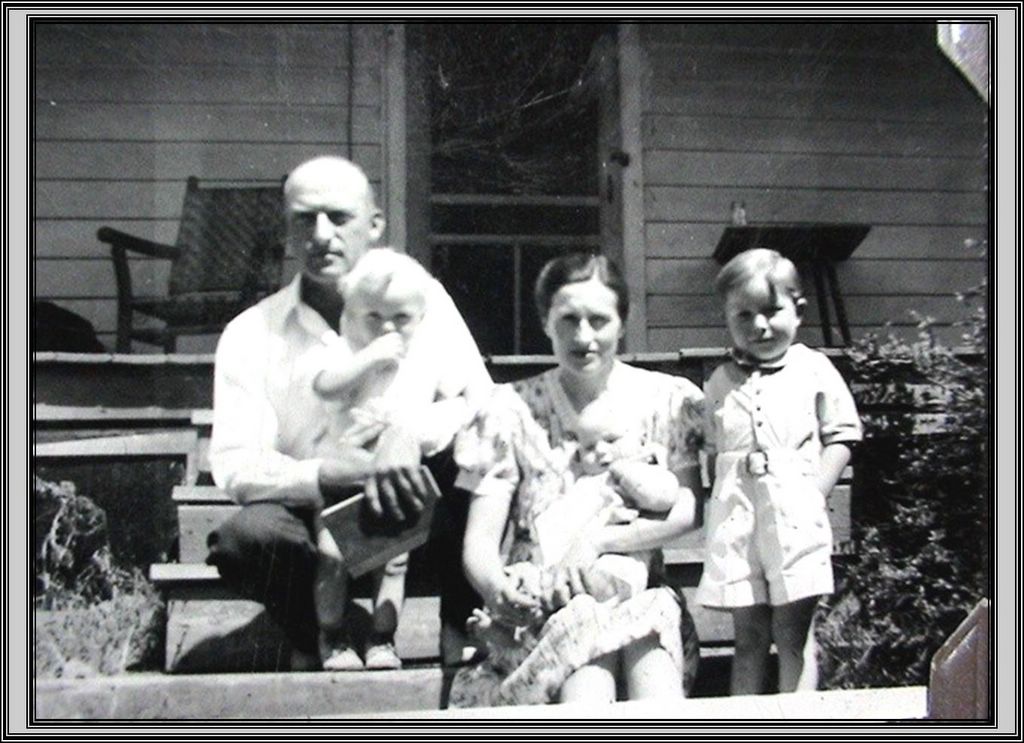
The Youngest Three Boys: 1947
From Left To Right:
Clifton John, David John, Frances Marietta, Wayne Morris, Douglas Maynard.
At The House In Gilboa When Dad Was The Gilboa Town Superintendent
Thursday, July 13, 2006
Doug & I Hunting Woodchucks
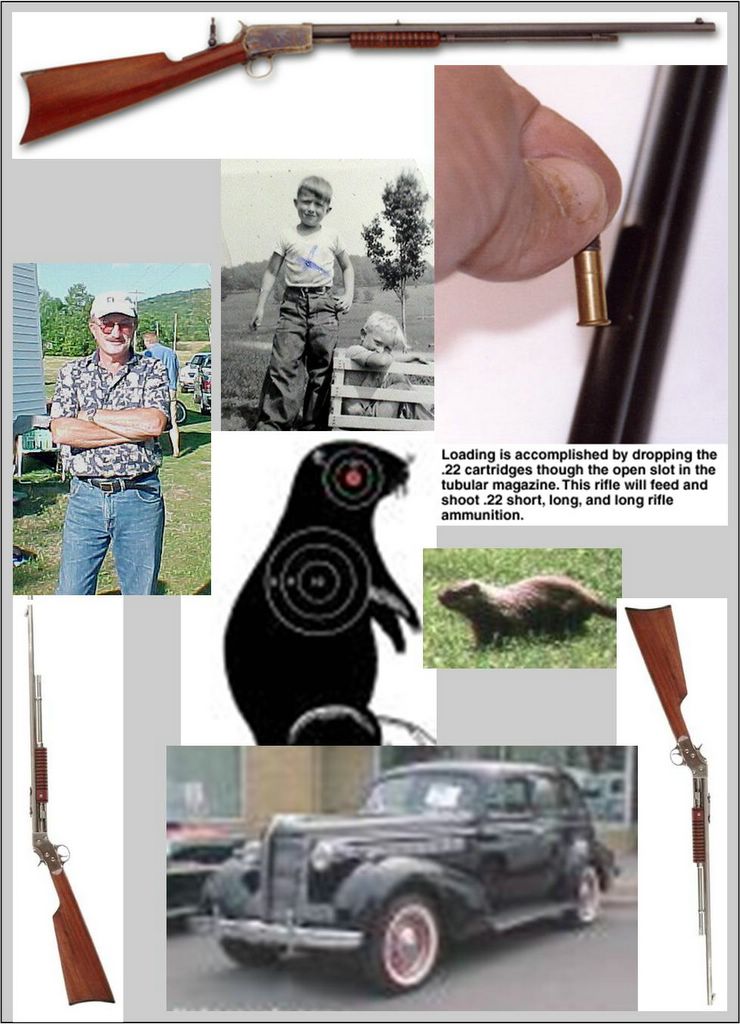
Hunting Woodchucks
Doug & I
Hunting Woodchucks
Doug and I took Dad’s old car out hunting one spring day
To hunt woodchucks with a .22 on the road toward Conesville way
Me fourteen and Doug was ten in a Buick ‘38
An old pump action .22 with the feed tube not quite straight
No air bags, seat belts, padded dash, soft steering wheels back then
Just a metal box and rigid steel, cast iron and plated tin
We started over the “cross” road, the day was bright and still
Turned right by Raymond Goodfellows then on down Fancher’s hill
Doug was fooling with the gun trying to load some shells
As we came up to Bob Cammer’s place, that farm he kept so well
As I looked over toward the gun and turned my head to see
I drove that damned old Buick straight into a big Oak tree
The horn popped out and hit my face, the steering wheel jammed my chest
And Doug bounced off that metal dash, then all just came to rest
Smoke and steam poured from the hood, the motor screaming, rough
Then I reached down and found the key and turned that damned thing off
Alton Brand was driving by and stopped and pulled us out
He said, “ It was the damndest thing I’d seen or thought about.”
“That car was going down the road as straight as straight can be
“It didn’t brake or make a curve, just drove into that tree”
The State Police came out that night to make out their report
Dad had to say I stole that car to keep us out of court
The trooper took me to the porch and said his terse, brusque talk
“The next time you go hunting things, I think you’d better walk”
So at aged 14 I’d wrecked a car and hurt my brother’s eyes
And I guess the thing I think about as years & months fly by
Malaria, bike accidents, close calls in cars and trucks
Living long and getting old takes lots and lots of luck
Monday, July 10, 2006

Saturday, June 17, 2006
The Oneonta Daily Star, December 20, 1955
GILBOA--"Off The Track," a comedy in three acts by Felicia Metcalf, was given by the class of 1956.
The cast included David Kispaugh, Gerald Hubbard, Mary Clark, Betty Snyder, Lucy Roe, Camilla Acello, Cosma DeSalvo, Charles Wyckoff, William Drebitko, Walter Micha, Rose Brainard, Bonnie Brown and Joan Marquit.
Here is a synopsis of the play I got off the Internet: I play Silas Dobbins.
A fascinating group of people are thrown together when a passenger train is derailed and the passengers wait inside for a relief train. The group includes three peppy college girls, a young male law student, a good-natured Italian woman and her two children, and the wealthy, extremely haughty Mrs. Reginald Vanderventer. There is also a nosy old maid, Miss Pidgie McDougal, a peculiar deaf man who has a mysterious old suitcase which he never lets out of his sight (tickling Miss Pidgie’s ever-present curiosity), and an engaged couple. The crowd is thrown into pandemonium when Mrs. Vanderventer discovers that her $10,000 string of pearls is missing, later discovered in Mrs. Guarino’s bag. Bill Lindsay, the prospective lawyer, announces that he is going to hold a preliminary trial and appoints a judge and jury. He will defend Mrs. Guarino. Cleverly, he clears her name and exposes the guilty party just in time for Miss Pidgie to learn about the contents of the mysterious suitcase! One interior set.
OFF THE TRACK
CAST OF CHARACTERS
(5 men, 8 women, extras if desired)
MR. JOHN MORGAN
Station agent, aged about forty works at his desk in his shirt sleeves and vest, wears a
green visor to shade his eyes. He is rather surly at times. Slightly gray, a few lines on
his forehead and at eyes, no rouge.
SILAS DOBBINS Gerry Hubbard
Handy man around the station keeps up the fire, sweeps out, and fills the water
cooler. Aged twenty-five wears old blue overalls and a blue shirt, a railroad cap with
a visor, heavy muddy boots. Hair needs cutting and he needs a shave, lines on
forehead and at eyes, florid complexion.
FLICKIE NELSON
Attractive and peppy college girl aged eighteen. Wears a pretty suit and blouse, long
bob, plenty of lipstick, very little rouge.
BETTY PHILLIPS
Also a college girl, aged eighteen. Clothes, make-up, and hair-do similar to those for
Flickie.
JOAN PARKER
College girl aged eighteen. Clothes, make-up, and hair-do same as for other girls.
MRS. GUARINO Camilla Acello
An Italian woman aged forty good-natured and generous, very fat. Wears a red scarf
over her head, her dress doesn't fit very well, her skirt is gathered all around her
waist, she wears large clumsy looking shoes, and a black coat. Her hair is black and
is combed straight back from her face to a knot on the back of her neck. Her
complexion is sallow-no rouge or lipstick.
ANTONIA GUARINO
Her daughter aged twelve. She has a dirty face and her hair needs combing wears a
plain cotton dress, rusty looking shoes, black hair, sallow complexion, no lipstick or
rouge.
BILL LINDSAY
Attractive and good-looking college student aged twenty, wears a nice looking suit
with sweater, no hat, full of fun a little rouge on cheeks.
MR. OSCAR POZENBY
Aged fifty, hair is gray and becoming bald. He is deaf. He is wearing a badly fitting
suit of clothes. He is quite unsociable heavy lines on forehead and around eyes.
WILLIE WOODSON Billy Drebitkl, I think.
Thin, pale, slight in stature, aged twenty-two wears a nice suit, collar, and tie, very
little rouge.
Many Thanks To Maude Haskins For The News Clipping
The cast included David Kispaugh, Gerald Hubbard, Mary Clark, Betty Snyder, Lucy Roe, Camilla Acello, Cosma DeSalvo, Charles Wyckoff, William Drebitko, Walter Micha, Rose Brainard, Bonnie Brown and Joan Marquit.
Here is a synopsis of the play I got off the Internet: I play Silas Dobbins.
A fascinating group of people are thrown together when a passenger train is derailed and the passengers wait inside for a relief train. The group includes three peppy college girls, a young male law student, a good-natured Italian woman and her two children, and the wealthy, extremely haughty Mrs. Reginald Vanderventer. There is also a nosy old maid, Miss Pidgie McDougal, a peculiar deaf man who has a mysterious old suitcase which he never lets out of his sight (tickling Miss Pidgie’s ever-present curiosity), and an engaged couple. The crowd is thrown into pandemonium when Mrs. Vanderventer discovers that her $10,000 string of pearls is missing, later discovered in Mrs. Guarino’s bag. Bill Lindsay, the prospective lawyer, announces that he is going to hold a preliminary trial and appoints a judge and jury. He will defend Mrs. Guarino. Cleverly, he clears her name and exposes the guilty party just in time for Miss Pidgie to learn about the contents of the mysterious suitcase! One interior set.
OFF THE TRACK
CAST OF CHARACTERS
(5 men, 8 women, extras if desired)
MR. JOHN MORGAN
Station agent, aged about forty works at his desk in his shirt sleeves and vest, wears a
green visor to shade his eyes. He is rather surly at times. Slightly gray, a few lines on
his forehead and at eyes, no rouge.
SILAS DOBBINS Gerry Hubbard
Handy man around the station keeps up the fire, sweeps out, and fills the water
cooler. Aged twenty-five wears old blue overalls and a blue shirt, a railroad cap with
a visor, heavy muddy boots. Hair needs cutting and he needs a shave, lines on
forehead and at eyes, florid complexion.
FLICKIE NELSON
Attractive and peppy college girl aged eighteen. Wears a pretty suit and blouse, long
bob, plenty of lipstick, very little rouge.
BETTY PHILLIPS
Also a college girl, aged eighteen. Clothes, make-up, and hair-do similar to those for
Flickie.
JOAN PARKER
College girl aged eighteen. Clothes, make-up, and hair-do same as for other girls.
MRS. GUARINO Camilla Acello
An Italian woman aged forty good-natured and generous, very fat. Wears a red scarf
over her head, her dress doesn't fit very well, her skirt is gathered all around her
waist, she wears large clumsy looking shoes, and a black coat. Her hair is black and
is combed straight back from her face to a knot on the back of her neck. Her
complexion is sallow-no rouge or lipstick.
ANTONIA GUARINO
Her daughter aged twelve. She has a dirty face and her hair needs combing wears a
plain cotton dress, rusty looking shoes, black hair, sallow complexion, no lipstick or
rouge.
BILL LINDSAY
Attractive and good-looking college student aged twenty, wears a nice looking suit
with sweater, no hat, full of fun a little rouge on cheeks.
MR. OSCAR POZENBY
Aged fifty, hair is gray and becoming bald. He is deaf. He is wearing a badly fitting
suit of clothes. He is quite unsociable heavy lines on forehead and around eyes.
WILLIE WOODSON Billy Drebitkl, I think.
Thin, pale, slight in stature, aged twenty-two wears a nice suit, collar, and tie, very
little rouge.
Many Thanks To Maude Haskins For The News Clipping
Sunday, June 11, 2006
Tapping Trees
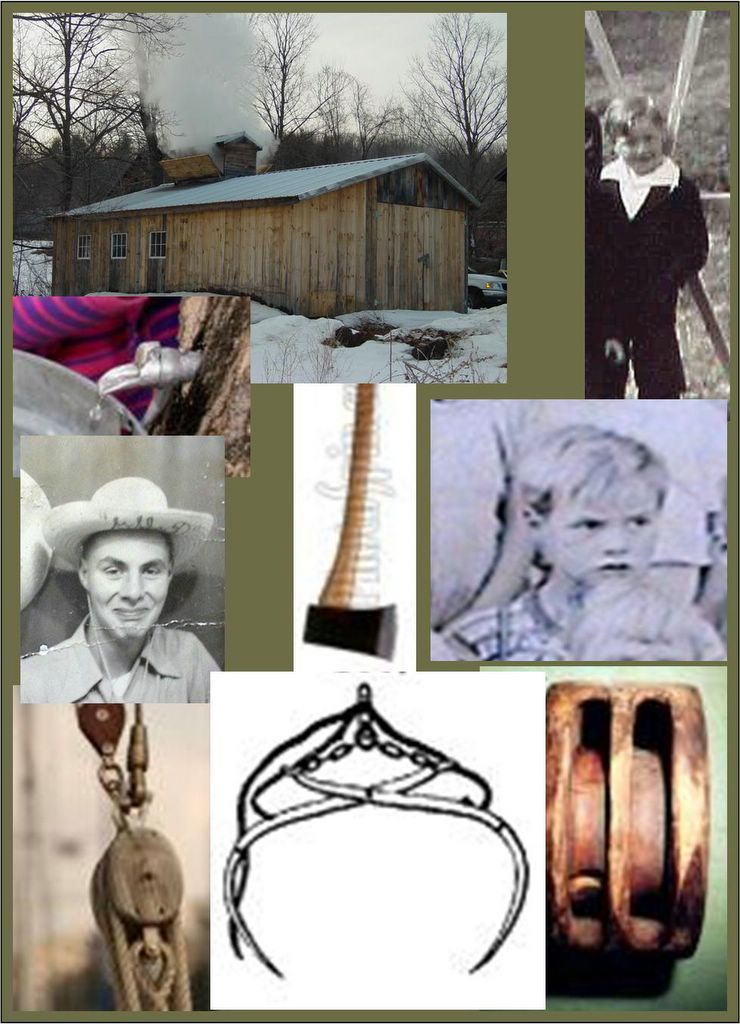
Tapping Trees
Merel Jr. chopped my finger off when I was eight years old
Betty said her parents almost died when they were told
We thought we’d make some maple syrup that day in early spring
We gathered spigots, augers, hammers, pans, & pails to bring
Out to the woods across the road where lots of maples were
With tag alders and large beech trees, White pine and Douglas fir
Folks used to tap a lot of trees out there when we were young
The biggest sugar bush I knew was Bessie Cleveland’s farm
Ernel Briggs would boil the sap o’er smoky crackling fires
To get that wondrous maple syrup to fulfill our desires
For tastes and smells to make our lives a little bit more sweet
We’d drown our eggs and pancakes in it ‘n make ’em “fit to eat”.
So we gathered some old siding for the fire to boil the sap
The other kids took all the tools to find some trees to tap
Merel Jr. had the axe to swing and I would hold the wood
And move my hand before he hit as quickly as I could
About the second chop or so, all things just went to hell
The axe came down on my right hand and blood began to swell
My right hand middle finger tip hung by a slender strip
The bright white bone was shining through as blood began to drip
Merel Jr screamed and horrified, he grabbed me by the arm
And dragged my through the barn yard crick and up behind the barn
My mother, hearing screams, came out an met us on the lawn
Took Wayne’s clean diaper from the line and wrapped my hand & arm
They took me to Doc Persons, a doc in Lexington
A mustached red faced kind old man, much rumpled and rotund
He took that flopping finger tip and stood it up real straight
And with a splint just wrapped it up with white adhesive tape
Two days later we went back to see that plump old doc
To bar lockjaw, each scrawny arm received 8 tetnus shots
That finger used to throb and ache in weather wet or cold
But all of that evolved away as I got grey and old
Lots of kids got hurt back then on farms their families owned
The most dangerous place for a kid back then was the place that they called home
At Mackey’s Corners, Bobby Mace lost a thumb one day
He got it caught in block and tackle used to draw off hay
I remember him one handed shooting fouls from the line
While the rest of us threw underhand, like Mikan at the time
Now all that’s 60 years ago and if you haven't seen it
When I flip you the finger, you can see I really mean it.
Notes From The Internet:
Tree Tapping - Where It All Begins
Did you know that although Europeans knew how to tap trees, it was the American Indian who discovered how to make maple syrup?
Indians from New England to Canada were producing maple syrup from 1664. The Indians made a sloping cut, or gash, two inches deep and 2-1/2 inches long, in the side of a tree. A knife or wood chip was put into the bottom of the cut so the sap flowed down the cut, onto the knife and into a receptacle on the ground.
The receptacles were made either of bark caulked with pitch or hollowed out logs. By 1765, the settlers changed the Indians' tapping to tree boxing. They trimmed off the bark and chopped a 1/2-inch deep square or rectangular hole into the tree trunk. A sloping trough was put into the tree trunk to take the sap from the hole, or box, to a spout or spile, which led the sap from the trough to a receptacle.
Boring holes in a tree started around 1774.By 1950, the present day tapping was accepted. Spiles are used to direct the flow of sap from the trunk. Originally they were wooden, then the Eureka sap spout, made of galvanized cast iron, took over. It was replaced by metal spiles and buckets and also plastic spiles for plastic or polyethylene tubing.
The Indians used a basket or tub from hollowed out tree bark as a collecting receptacle. They were placed on the snow or ground at the base of the tree. Troughs were used by the colonists until the late 1840's.
Wooden buckets or pails were introduced as early as 1748, but weren't common until much later. Wooden buckets were still used in 1935; then they were replaced by tin-plated buckets because the wooden buckets dried out and leaked if they weren't painted every year.
Bucket covers have been used since 1870 to keep leaves and debris out. Plastic tubing, used since 1965, takes sap directly to a gathering vat or storage tank.
Saturday, May 27, 2006

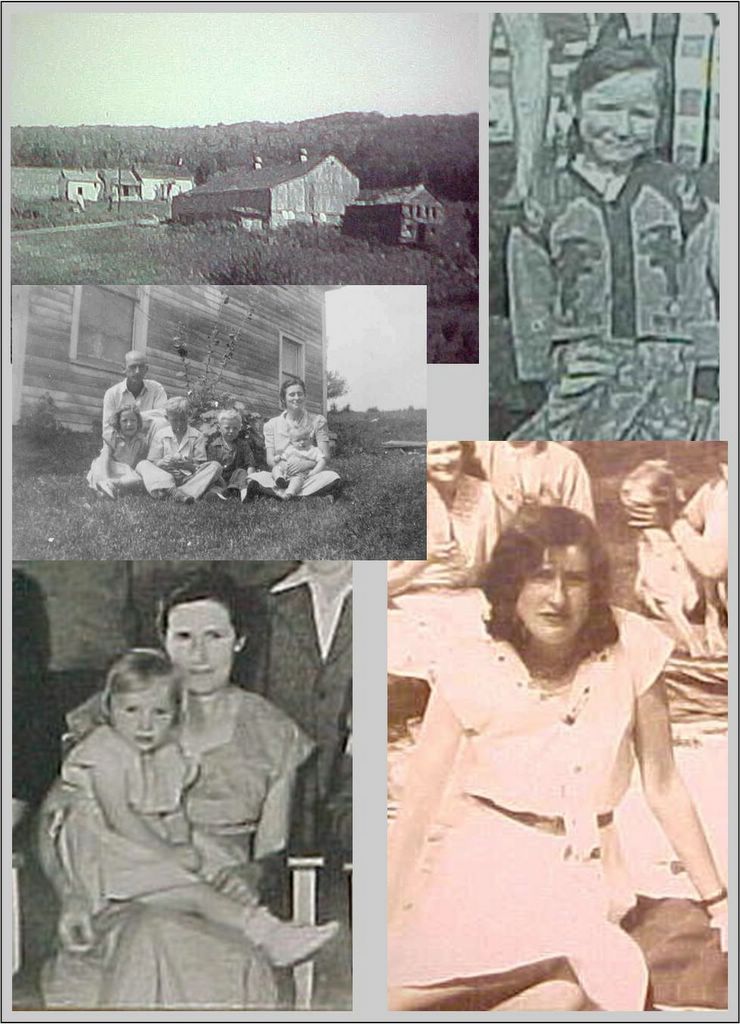
Saturday, May 13, 2006
The Boys, Their Dad & Their Cars About 1954: Rebuilding The Garage
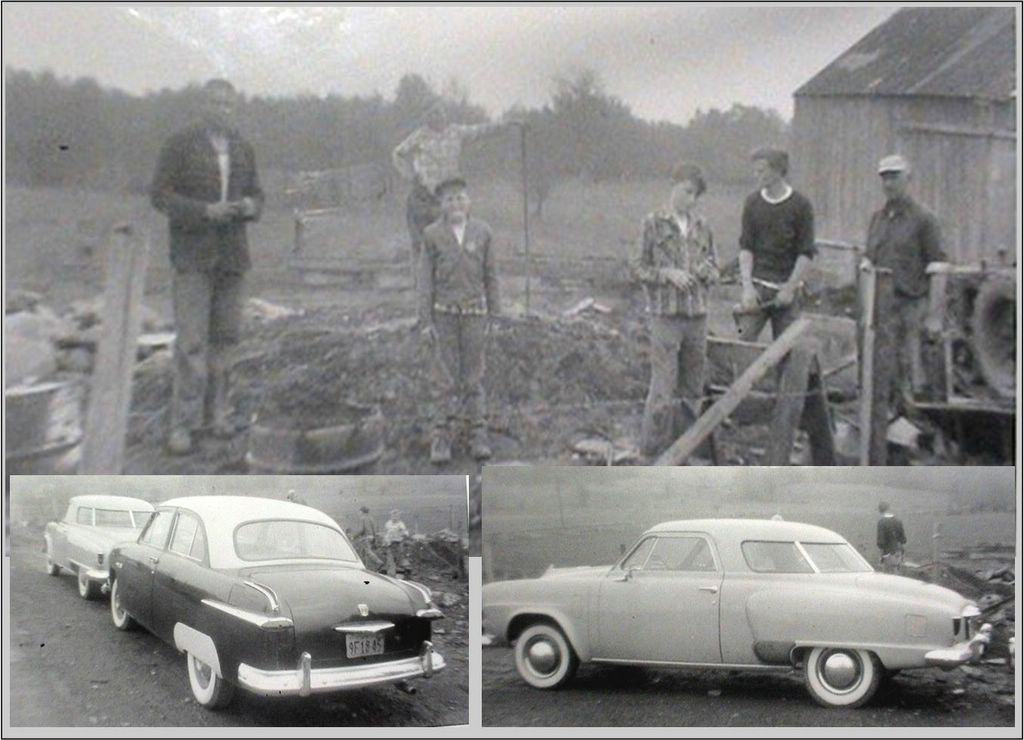 Top: Clifton LaVerne, David John, Wayne Maurice, Douglas Maynard, Gerald Elmer, Clifton John
Bottom Left: 1952 Studebaker Champion & 1951 Ford, David & Wayne In The Background
Bottom Right: 1952 Studebaker Champion, Gerald In The Background
LaVerne owned the Studebaker, Dad owned the Ford.
One time, Laverne let me use the Studebaker to go to a drive-in movie and when I left, I forgot about the speaker and drove away breaking the driver side window.
The fender skirts and the fins on the Ford were supposed to be cool.......
Thursday, May 04, 2006
Carp Diem

Carp Diem
Eugene Carman
Rhodes’s slave! Selling shoes and gingham,
Flour and bacon, overalls, clothing, all day
long
For fourteen hours a day for three hundred and
thirteen days
For more than twenty years,
Saying “Yes’m” and “Yes Sir” and Thank
you”
A thousand times a day, and all for fifty dollars a
month.
Living in this stinking room in the rattle-trap
“Commercial.”
And compelled to go to Sunday School and to
listen
To the Rev. Abner Peet one hundred and four times
a year
For more than an hour at a time,
Because Thomas Rhodes ran the church
As well as the store and the bank.
So while I was tying my neck-tie that morning
I suddenly saw myself in the glass:
My hair all gray, my face like a sodden pie.
So I cursed and cursed: You damned old thing!
You cowardly dog! You rotten pauper!
You Rhode’s slave! Till Roger Baughman
Thought I was having a fight with some one,
And looked over the transom just in time
To see me fall on the floor in a heap
From a broken vein in my head.
From "The Spoon River Anthology", Edgar Lee Masters, 1915
Saturday, April 29, 2006
The Peddler
The Peddler
The Peddler
The peddler, an old Jewish man, drove up from New York
He went to church on Saturdays and stayed away from pork.
His dull green Chevy paneled truck was built in ‘32
And he dressed in denim overalls, faded, worn and blue
A real life old time peddler, his route was long and rough
And he drove the Catskill Mountain roads selling all his stuff
Straw hats and jeans and sewing thread, his truck was crammed with goods
And he’d start out high and end up low just like we knew he would
He had a scraggly unkempt beard all sprinkled through with gray
His deep set eyes held a guarded look that never went away
His manners were impeccable, old world genteel and fine
His voice, accented, rumbled low, but always warm and kind
A rolling-dry-goods-hardware-store, he’d show up close to noon
And to keep his faith, for lunch he ate potatoes with a spoon
That old green truck was loaded with his memories and his dreams
As well as kaki shirts and pants and gingham by the ream
He’d always block the tires so his old truck wouldn’t roll
And I bet he had the shadows of old pogroms on his soul
Of all the many millions he knew of one a least
An uncle, brother, nephew, a neighbor or a niece
I heard his wife took her own life in a very painful way
By drinking lye or DDT on a bleak, besotted day
Other’s lives are mysteries we cannot fathom well
I guess she changed a hell to heaven or heaven into hell
We don’t know where he came from and we don’t know where he went
But he still lives in our memories as strange and old and bent
And when I think about him now, I’d really like to know
Would he be surprised we remember him from 60 years ago?
Subscribe to:
Posts (Atom)